Amended Capital Law to boost urban ecological agriculture development in Hanoi
With agriculture as its main economic sector, Hanoi's agriculture serves as the core and driving force for regional and national development.
Covered by the Capital Law (amended), pending approval by the National Assembly, Hanoi will issue specific policies and mechanisms for the agricultural sector to maximize its potential and promote the development of urban organic agriculture, declared the deputy director of the Department of Agriculture and Hanoi Rural Development, Ta Van Tuong, in an interview with Hanoimoi newspaper.
How does agriculture in Hanoi contribute to the capital's economy?
| Deputy Chairman of Hanoi People's Committee Nguyen Manh Quyen shows the Cuban delegation a high-tech agricultural model in Hanoi's Me Linh district. Photos: Trong Tung/The Hanoi Times |
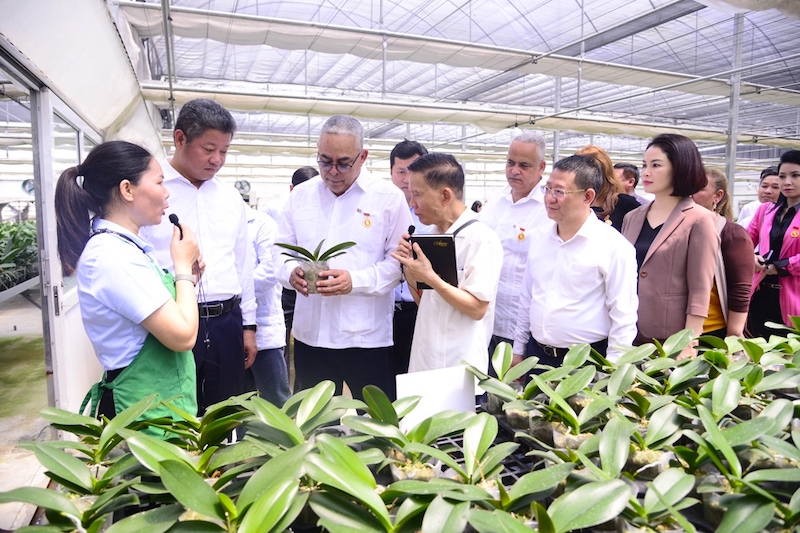
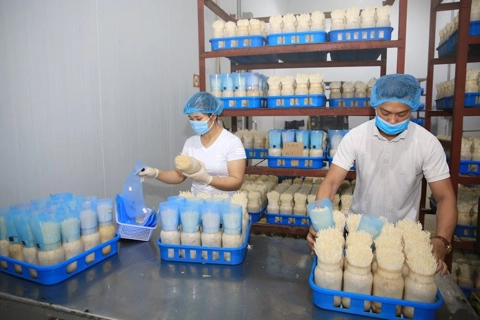
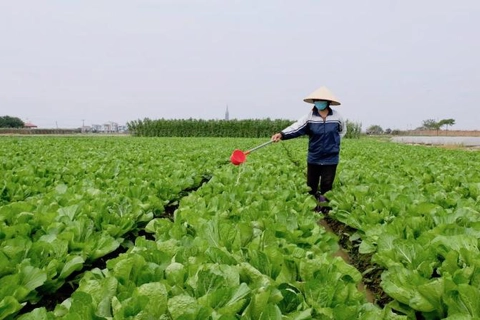
Hanoi has issued many policies to support agriculture, such as integrating scientific and technological advances into production, establishing supply chains, and forming large-scale production areas, including the establishment of 35 areas for rice cultivation, 104 for vegetable growing, 56 for fruit farming, 66 for aquaculture, and 162 for animal husbandry.
Many high-tech agricultural models have generated substantial economic benefits. Some products from Hanoi, such as late-ripening lychee and organic rice from Dong Phu Commune (Chuong My District), are consumed domestically and exported to Europe and America. The value of the city's agriculture has experienced strong growth at around 3-3.5% per year.
In the capital region, which includes 10 provinces and cities covering an area of 24,000 square kilometers with a population of 20 million, the majority of whom live in rural areas and are dedicated to agriculture, Hanoi's agriculture serves as the core and driving force for regional and national development.
What are the existing constraints to agriculture, farmers and rural areas in Hanoi?
Currently, although nearly 50% of the population lives on the outskirts of the city, their agricultural production meets only 20-70% of the city's food demand.
In addition, they practice small-scale agricultural production, characterized by low productivity, quality and value. Investments in production have not been appropriately channeled, and the production structure is not sustainable or adapted to the city's natural conditions.
In addition, there is a lack of policies and laws that facilitate innovation and development of rural economic models, especially value chain-based production models.
Moreover, the laws governing the management and use of agricultural land present many obstacles to the development of high-tech agriculture, organic agriculture, and organized production based on modern and intelligent models.
There is a growing trend for farmers to leave their fields fallow and stop production, resulting in a waste of land resources. There is also a lack of policies to mobilize social resources to develop organic farming and protect the rural environment. The adoption of high technology remains low, and the economic and technical infrastructure for agriculture is weak.
How does the draft capital law (amended) address problems for organic agriculture and modern rural development in Hanoi, and what would be its impact on agriculture and rural areas in Hanoi?
| Deputy Director of the Hanoi Department of Agriculture and Rural Development Ta Van Tuong |
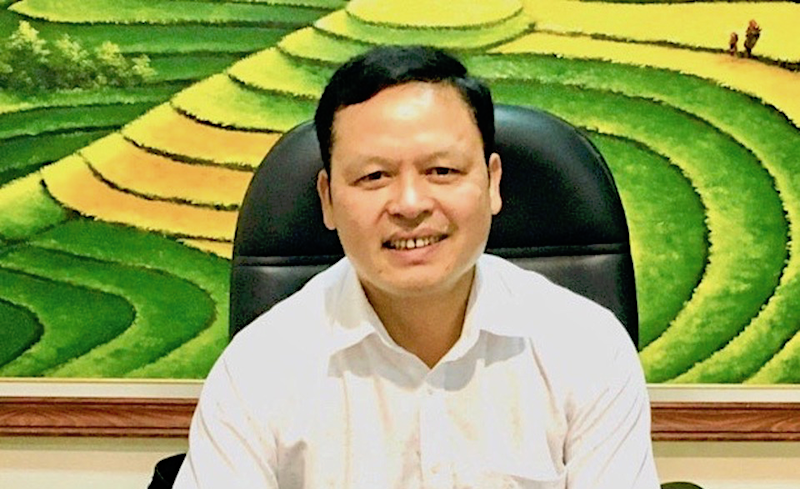
In recent discussions on the draft of the Capital Law (Amended), I have stressed that Hanoi needs to develop agriculture in an ecological direction, but ecological agriculture in the capital must have its own characteristics, which are different from agricultural production in other localities.
The enactment of the Capital Law (Amended) will open up new opportunities for agriculture in the capital to realize its potential and advantages in terms of human resources, science and technology, and investment capital. It will facilitate breakthroughs and focus on developing ecological and circular agriculture.
In particular, it stipulates the rational and effective use of land resources for agricultural and rural development. It proposes to allocate and utilize agricultural land along river banks for ecological agricultural production combined with tourism, educational experiences, and experiential travel.
The city will also be allowed to shift land use from rice farming to the cultivation of annual and perennial crops, animal husbandry, aquaculture, and other agricultural activities.
Hanoi will have the authority to decide on land use rights, land use leasing, and land use transfer for land consolidation for agriculture. It will allow the construction of solid support facilities on agricultural land to directly serve concentrated agricultural production.
If passed, the law will create favorable conditions for enterprises to invest in this sector. Hanoi's agriculture will develop with its own characteristics, focusing on value chain integration and product value enhancement. It will also provide a legal basis for Hanoi to build and further improve mechanisms and policies for agricultural development.
In addition, the landscape of agriculture, farmers and rural areas in Hanoi will undergo significant and positive changes, becoming an ideal model for agricultural and rural development and creating an optimal living environment.
Thank you for your time.