Banks need solutions to avoid bad debts
A banking expert said the central bank needs long-term and effective solutions to deal with bad debt after the pandemic.
The State Bank of Vietnam (SBV)’s Circular 01/2020/TT-NHNN, issued in March this year, has helped reduce the debt payment pressure for enterprises affected by COVID-19, other solutions are also introduced to deal with the bad debt.
| The central bank urged to have long-term solutions for banking sector amid the pandemic |
The circular requested credit institutions and the foreign bank branches to restructure the repayment periods, waive and reduce the interest and fees and maintain the debt classifications to facilitate them in handling debts for customers.
SBV’s Director of Credit Department Nguyen Quoc Hung said: “As of June 22, all credit institutions rescheduled debt repayment for more than 258,000 customers with outstanding loans worth nearly VND177 trillion (US$7.69 billion). They also waived and cut interest rates for more than 421,000 customers with outstanding loans worth more than VND1.26 trillion.”
However, banking expert Nguyen Tri Hieu considered the circular made bad debts more difficult to be assessed.
“The amount of outstanding loans from the restructured debts is large. If the borrowers could not pay the debts after the circular is expired, bad debts of banks will increase strongly,” Hieu said, adding banks without a backup would face with real problem.
“On the other hand, taking into account the subsidies including deferred debt, interest rate cut and other cost, the banking system will have to lose about VND30-34 trillion of income and 25% of its profit.”
According to Hieu, SBV needed long-term and effective solutions to deal with bad debt after the pandemic.
The central bank needed a combination of regulatory tools such as tax, social security, administrative procedures and increasing banking demand through public investment. The central bank should continue to be proactive and flexible in using monetary policy tools and increase credit limits for some commercial banks that have met Basel II standards, and have bad debt ratios below 2%.
At the same time, it should accelerate the digital transformation in local banks, especially retail banks serving individual customers and small and medium enterprises. Currently, Vietnam's internet usage and online transactions are among the top markets.
According to the DataReportal, as of January 2020, Vietnam had 145.8 million mobile phone subscribers, of which 93%used smart phones, and among 68.17 million internet subscribers, 65 million were using social networks.
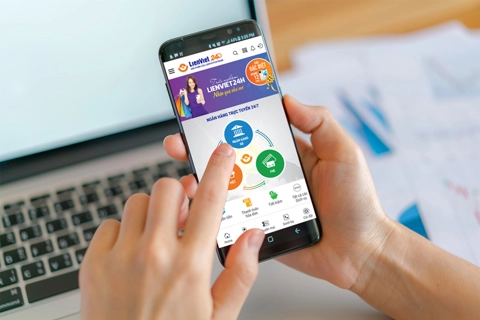
Experts said Vietnam could speed up and further promote the development of digital transactions based on internet banking and mobile banking.
In addition, the banks should grow the non-credit service known as the fintech. Vietnam Report revealed 46.15% of experts saw the much lower growth of credit and the emergence of fintech in the pandemic.
Therefore, bank should spend on financial and human resources to develop and improve non-credit services, especially modern services such as Internet banking, digital banking, use of QR codes and e-wallets.
Commercial banks are also encouraged to expand their cooperation with the tax, customs, state treasury, social insurance, payment service providers, as well as other service providers for the payment of their bills via banks as such services also help them cross-sell products such as deposits, overdrafts.
Experts also considered lower credit growth was a good opportunity for banks to adjust their loan portfolios towards a safer and more sustainable risk appetite, adding it is necessary to encourage businesses to cooperate with commercial banks to build a strict lending plan, more sustainable cash flows and feasible debt repayment ability.