Bringing traditional So Village glass noodles to global marketplace
Hanoi's dedicated farmers work tirelessly to bring their agricultural products to the world stage, introducing the products of the rich and flavorful bounty of Vietnam's fertile lands.
Residents in Tan Hoa Commune, Hanoi's Quoc Oai District cannot pinpoint the exact origins of their glass noodle-making tradition as the craft has been passed down through generations. Village elders claim that the name "So Village's Glass Noodles" refers to So, which is home to one of the most famous historic communal houses in the area.
Revival of So Village's glass noodles
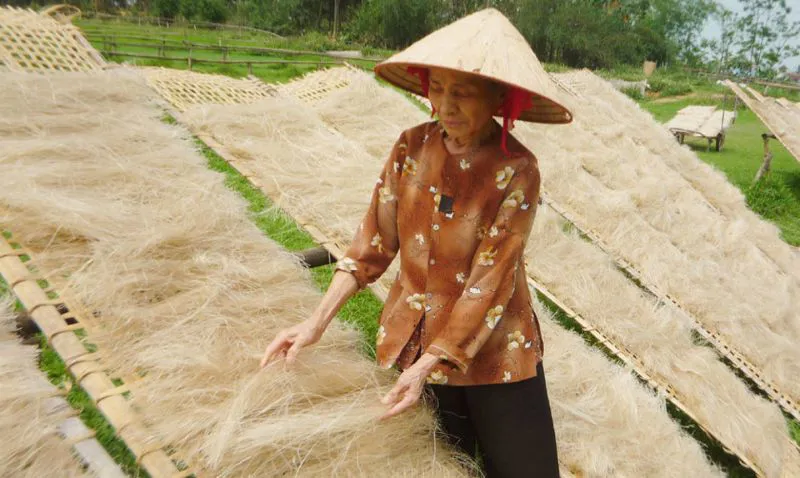
| The tradition of making glass noodles in So Village dates back decades. Photo: Phuong Nga/The Hanoi Times |
Located about 20 km from downtown Hanoi, So Village is surrounded by the four mountains of Long (Dragon), Ly (Unicorn), Quy (Turtle), and Phuong (Phoenix) in Quoc Oai District. The area is lush with green trees and nature has blessed it with a source of clear and sweet water. The unusual whiteness and unique taste of the village's glass noodle products are largely due to this immaculate water.
According to Vuong Dac Ty, owner of a long-established glass noodles workshop in Tan Hoa Commune, Quoc Oai District, to make delicious glass noodles, people in such a village use 100% arrowroot (starch made from Maranta arundinacea), which is ordered from northern provinces such as Dien Bien, Son La, Tuyen Quang, and Bac Kan.
Arrowroot undergoes a meticulous process, starting with a thorough soaking and washing to remove all sand and impurities. It must be filtered multiple times to ensure that flour is perfectly purified.
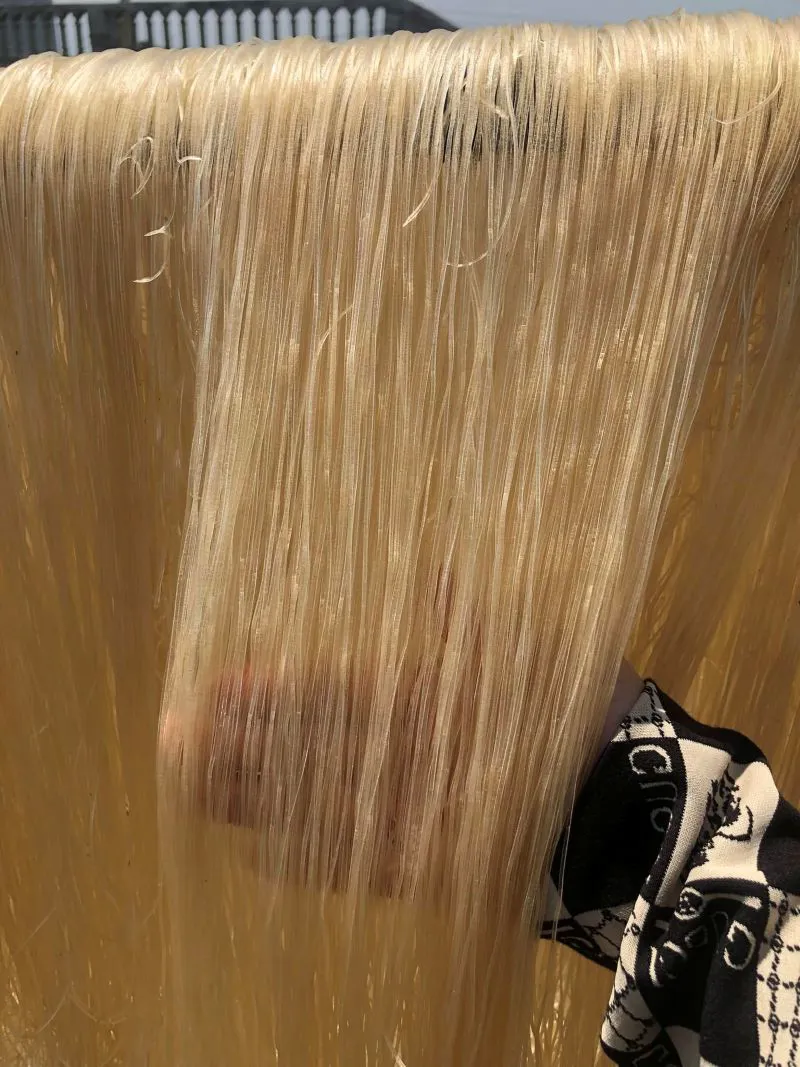
The arrowroot is steamed into cakes and then dried for about 90 to 180 minutes, depending on the weather. A unique aspect of this process is that the drying materials must be placed against the direction of the wind to ensure that it dries quickly and evenly. Once dried, the glass noodles cake is cut into fine fibers. These fibers are laid out in the fields for another three hours to achieve uniform dryness before being bundled and packed into bags.
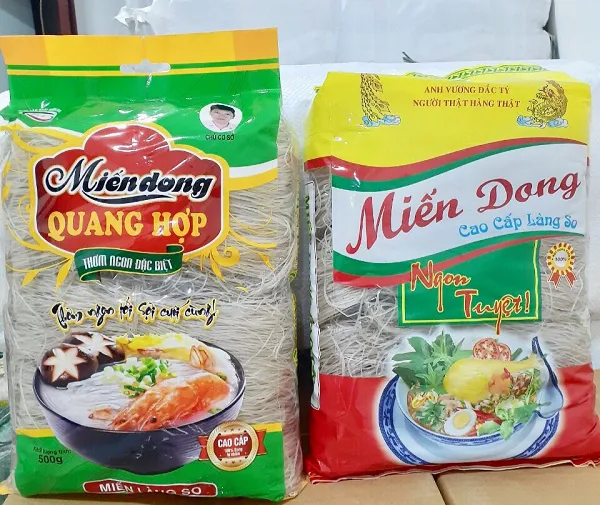
| A pack of So Village glass noodles. Photo: Thien Tam |
The villagers make glass noodles all year round, but production peaks from September to December to meet the demand for Tet (the Lunar New Year). During this period, known as the main harvest, volumes are higher than usual. In response to market demand and to reduce labor, households have invested in semi-automatic machines that achieve impressive productivity of 3,000 to 4,000 kg of glass noodles per day. Once purchased, the dried glass noodles should be kept in cold storage to preserve the original flavor.
Taking Hanoi's specialty to the world
Over the past few years, the local Party Committee, authorities, and people of So Village in Quoc Oai District have painstakingly preserved their traditional glass noodles craft.
As a result, the product has reached the 4-star standard under the national "One Commune, One Product" (OCOP) program, meeting the criteria for export.
| The drying process in the production of So Village glass noodles. Photo: Nguyen Ngan |
There was a time when the glass noodles industry in So Village, Hanoi, suffered from a decline in productivity. Many households had to abandon the business because it was labor-intensive. To stay in the centuries-old trade, many households have embraced technology in glass noodles production.
Nguyen Tien Chinh's family had been making glass noodles by hand for many years. However, outdated technology resulted in a poor quality product and the family had to stop production for a while. Unwilling to let the traditional craft die out, Chinh invested in modern machinery and technology.
"Since the application of modern technology, our productivity, product quality, and income have greatly improved, while maintaining the traditional value. As a result, local glass noodles have been exported to the US and Europe and sold throughout the country. We want to reach a wider range of customers with high-quality glass noodles, especially Vietnamese living abroad," he told The Hanoi Times.
| Fried glass noodles with eel, a Hanoi specialty from So Village. Photo: Phuong Do |
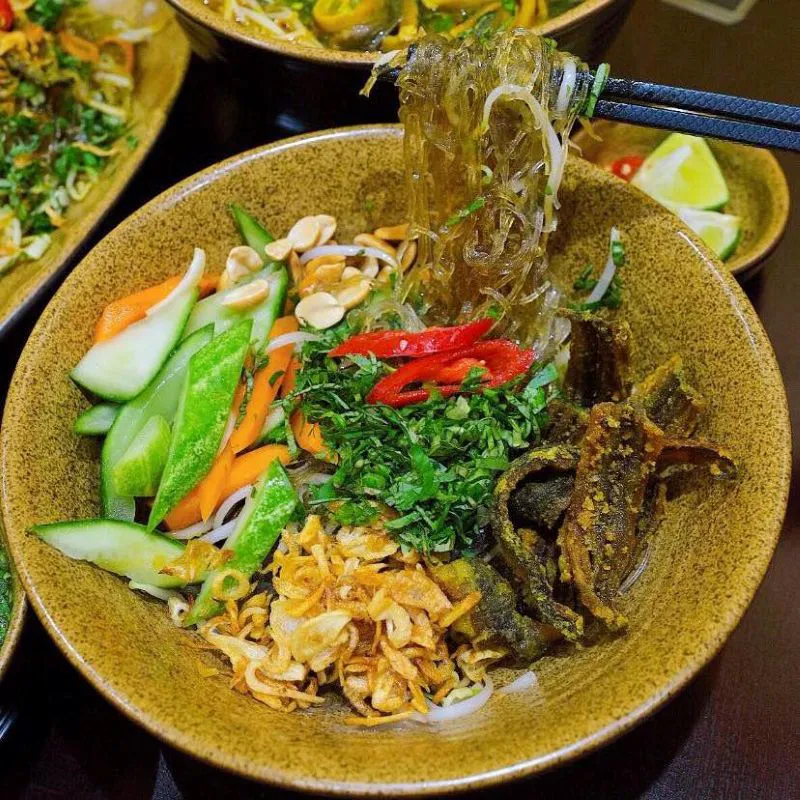
So Village's glass noodles are made with genuine arrowroot, giving it a distinctive, original flavor and a delightfully chewy texture. This versatile ingredient can be used to create a variety of delicious traditional Vietnamese dishes as well as Asian comfort foods such as chicken glass noodles, aromatic eel glass noodles, and refreshing Thai glass noodles salad, among many others.
Nguyen Van Duc, Vice Chairman of the People's Committee of Tan Hoa Commune, Quoc Oai District, said: "After applying high technologies in production, all stages are strictly followed. The workshops use clean water sources and ingredients. Many workshop owners have applied for OCOP four-star or higher certificates. The commune's People's Committee is working with the local authority to protect So Village glass noodles from trademark infringements that harm its traditional value and quality".
According to the leader of Tan Hoa commune, dozens of households in So Village produce glass noodles and export them to Japan, China, and Central Asia.
In order to concentrate production and improve product quality, the municipality has allocated 13 hectares of land for the development of a glass noodles industrial cluster. A smart field for drying glass noodles will be built in the near future.