Deputy PM presses for new electricity pricing scenarios in June
Any increase in electricity prices should be carefully planned in terms of size and timing to ensure market alignment, reduce losses for EVN, and meet inflation control goals.
Deputy Prime Minister Le Minh Khai urges ministries to propose the timing and scale of adjustments to electricity, healthcare, and education prices in June.
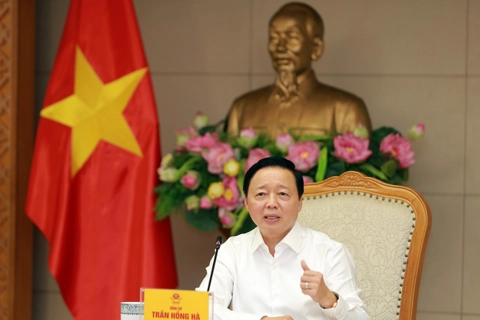
| Overview of the meeting. Source: VGP |

At the beginning of the year, the Ministry of Industry and Trade (MoIT) recommended that electricity prices be adjusted to reflect changes in input costs and to help Vietnam Electricity (EVN) secure funds to pay power plant investors. However, according to the Ministry of Finance, the MoIT has not yet proposed a specific pricing plan.
During a meeting of the Price Management Steering Committee on June 12, Deputy Prime Minister Khai instructed the MoIT to prepare scenarios, including the timing and scope of electricity price adjustments, to be submitted in June. Besides electricity prices, he also requested that the education and healthcare sectors prepare price management plans this month.
"The deadline is June 30 for scenarios to be ready for the Price Management Steering Committee to review and give feedback," Khai stated, adding that if deadlines are not met and this affects the Consumer Price Index (CPI), the relevant ministries will be held accountable.
In early February, Prime Minister Pham Minh Chinh emphasized that electricity price adjustments should be market-based and not abrupt. "The principle is competitive electricity pricing with state regulation," the Prime Minister noted.
Electricity is a critical commodity that is widely used and has a significant impact on both daily life and business operations. Dr. Nguyen Bich Lam, former head of the General Statistics Office (GSO), estimated that an 8% increase in energy prices could directly and indirectly raise the CPI by 0.4-0.5%.
Experts suggest that any increase in electricity prices should be carefully planned in terms of size, extent, and timing to ensure market alignment, reduce losses for EVN, and meet inflation control goals.
Since May 15, retail electricity price adjustments have followed Decision 05/2024, which allows for price changes every three months if input costs rise by 3% or more. The most recent increase was 4.5% in November 2023.
Vietnam aims to keep the average CPI growth at 4-4.5% this year. The Ministry of Finance and the General Statistics Office estimate this year's average inflation to be around 3.72-4.5%, which is within the target range. The State Bank of Vietnam predicts it could reach 4.6% under adverse conditions.
At the meeting, Deputy Finance Minister Le Tan Can noted that education and healthcare services are also putting pressure on price levels as they are due for scheduled adjustments.
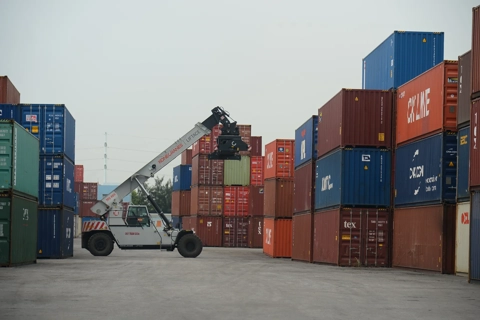
Domestic airfare is also under pressure from global trends. Rising logistics costs and surcharges on containerized goods at seaports also weigh business expenses. Conversely, global inflation is expected to ease in 2024, reducing imported inflationary pressures on Vietnam.
To manage inflation, Deputy Prime Minister Khai urged ministries and local authorities to remain vigilant in the face of significant inflationary pressures ahead. Ministries must closely monitor the economic situation and geopolitical developments to develop responsive scenarios, he noted.
He also directed regulatory agencies to ensure the supply and circulation of goods and services, particularly fuel and other strategic commodities, which could be affected by global supply chain disruptions and geopolitical conflicts.