14TH NATIONAL CONGRESS OF THE COMMUNIST PARTY OF VIETNAM
Log in
Property

Disbursement of public funds reaches over 50% in 8-month period

Leaders’ attention to public investment is of significance, regardless of the size of the project, said a senior official.

Disbursement of public investment funds in the first eight months of 2021 reached VND245 trillion ($10.76 billion), or 51.1% of the year’s target and representing a slight increase of 0.4% year-on-year.

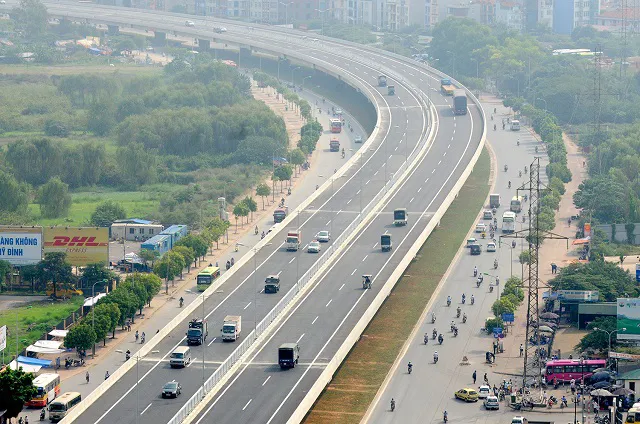
 Elevated ring road No.3 project in Hanoi. Photo: Hai Linh

“The figure, however, remains lower than expected, as the Covid-19 pandemic and stay-at-home order adopted by several provinces/cities are making it hard for the execution of public projects,” noted the General Statistics Office (GSO) in its monthly report.

In addition to the current pandemic situation, Vice Minister of Planning and Investment (MPI) Tran Quoc Phuong noted rising construction materials and the lack of commitment from government agencies and localities are factors hindering progress in public investment.

Data from the GSO noted the high disbursement rate mainly comes from large-scale projects or those of national priority. On the contrary, local projects of small scale register slow progress.

“Leaders’ attention to public investment is of significance, regardless of the size of the project,” Phuong said.

In a recent directive urging for localities to speed up public investment in the remaining months of the year, the Government called for greater responsibility and political determination from leaders to realize the disbursement target.

The directive also pointed out other shortcomings that need to be addressed, including the slow procurement and site clearance, as well as inefficient cooperation between different agencies in supervision or realizing administrative processes.

This year, the Government targets to disburse 95-100% of the VND461.3 trillion ($20.2 billion) of public investment funds allocated for this year, for which the rate should be at least 60% by the end of the third quarter, or VND276.7 trillion ($12.12 billion).

According to the directive, the slow disbursement of public funds reverses the positive effects of investment projects and leads to waste of resources.

This is particularly a concerning issue as this could delay the implementation of monetary and fiscal policies at a time when the economy is still struggling with the Covid-19 impacts, it added.

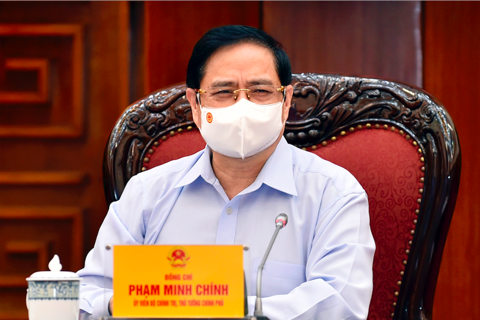
To speed up public investment, Prime Minister Chinh requested the MPI to shift state funds allocated to provinces/cities or ministries having disbursement rates below 60% to those disbursing at a higher pace.

During the eight-month period, the disbursement in Hanoi stood at VND27.5 trillion ($1.2 billion), representing an increase of 3.4% year-on-year and equivalent to 54% of the year’s estimate.

The city identifies public investment as a key measure to boost economic recovery during the pandemic, especially as fulfill the economic growth target for 2021 of  7.5%.

By the end of the third quarter, Hanoi expects to disburse 60% of the targeted amount and 100% for the whole year.

Reactions:
Share:
Trending
Most Viewed
Related news
Tet renovation rush strains Hanoi crews, lifts finishing material costs prices

Tet renovation rush strains Hanoi crews, lifts finishing material costs prices

Hanoi’s home renovation market has entered its busiest stretch of the year, as year-end demand tightens contractor availability and raises the cost of finishing materials.

Vietnam construction materials rebound as prices rise and public investment accelerates

Vietnam construction materials rebound as prices rise and public investment accelerates

Rising steel and cement prices, stronger public investment spending and improving consumption across key material segments point to a broad recovery in Vietnam’s construction materials sector as 2026 begins.

Hanoi sets 40 sq.m housing space goal to lift urban living standards

Hanoi sets 40 sq.m housing space goal to lift urban living standards

Raising average housing space marks a people-centered shift in urban policy as the capital works to improve living standards, expand social housing and ensure that rapid economic growth goes hand in hand with safer and more livable neighborhoods.

Prime Minister urges measures to boost supplies and control house prices

Prime Minister urges measures to boost supplies and control house prices

Vietnam’s government is stepping up efforts to rebalance the real estate market as Prime Minister Pham Minh Chinh urges faster policy action to expand housing supply, address affordability pressures and ensure the sector supports both economic stability and social welfare.

Ho Chi Minh City forms first professional association for apartment management

Ho Chi Minh City forms first professional association for apartment management

Amid rapid urban growth, Ho Chi Minh City has established a professional body for apartment management, becoming the first locality in Vietnam to do so.

Real estate credit surge prompts tighter oversight to safeguard Vietnam’s financial stability

Real estate credit surge prompts tighter oversight to safeguard Vietnam’s financial stability

Vietnam’s real estate sector has absorbed a sharp rise in credit, supporting market recovery while raising concerns over capital concentration, speculative risks and the need for tighter policy coordination.

Revised housing roadmap doubles social housing targets for Hanoi

Revised housing roadmap doubles social housing targets for Hanoi

Vietnam’s push to accelerate affordable housing has significantly raised expectations for major cities, with Hanoi now tasked with delivering a far larger volume of social homes as part of the national goal to build more than one million units by 2030.

Social housing supply exceeds targets in 2025 as Vietnam tackles property imbalances

Social housing supply exceeds targets in 2025 as Vietnam tackles property imbalances

Vietnam surpassed its social housing construction target in 2025, marking progress in housing policy, but supply mismatches, high prices and legal bottlenecks continue to weigh on the real estate market.