Finance ministry expected to impose 50% duty on e-cigarettes
Vietnam has one of the highest smoking rates in the world, with 38.9% of males over the age of 15 being smokers.
The Ministry of Finance (MoF) remains steadfast in its decision to impose a 50% duty on e-cigarettes and related products, despite reservations expressed by other government agencies and businesses.
| Vietnam's tobacco tax remains relatively low, among the lowest in the ASEAN region. Source: VTV |

In providing feedback on the draft Decree on preferential export-import tariffs, the Ministry of Health (MoH) suggests that the MoF refrain from including e-cigarettes and related products in the list of items eligible for preferential export and import tariffs.
The MoH has consistently recommended that the government ban the trade of e-cigarettes and heat-not-burn tobacco products in Vietnam due to their negative impact on health, society, and the environment, particularly on users, especially youth.
Currently, the import, production, and business of new tobacco products, devices, components, and solutions for e-cigarettes and heated tobacco products are not permitted in Vietnam. Therefore, according to the MoH, it is not relevant to formulate regulations or define this product.
Similarly, the Ministry of Public Security contends that since there is no current import policy for these items, it is inappropriate to set a duty rate. Japan Tobacco International (JTI), a part of the Japan Tobacco Group engaged in the international tobacco business, recommends maintaining the existing 0% tax rate instead of imposing the proposed 50% tax, arguing that new-generation tobacco products, including e-cigarettes and heat-not-burn tobacco, are less harmful compared to traditional cigarettes.
British American Tobacco (Singapore) also finds the proposed 50% tax rate inconsistent with international norms, stating that imposing high taxes on electronic devices will encourage smuggling. The company suggests that the MoF should refrain from implementing a high tax rate until a clear policy direction is established.
Faced with such arguments, the finance ministry asserts that the proposed tax rate is necessary and appropriate, as endorsed by various government members. The ministry emphasizes that the circulation, export, and import of goods in the market will adhere to specialized legal regulations. For commodities already included in Vietnam's export-import directory, tax rates should be set to apply when these products are in circulation in the market.
The Ministry of Industry and Trade has advised the Ministry of Finance that under current regulations, equipment used for e-cigarettes falls under the category of electronic devices, which are subject to a 5% tariff under Vietnam's WTO accession commitments. Therefore, the Ministry of Industry and Trade suggested that the Ministry of Finance ensure compliance with Vietnam's WTO commitments. If the tariff rate remains at 50% as provided in the draft Decree, the Ministry of Industry and Trade asks the Ministry of Finance to prepare a response if any country requests an explanation.
In reply to the Ministry of Industry and Trade, the Ministry of Finance said that when Vietnam joined the WTO, e-cigarettes (solutions and devices) were not available. In formulating Decree 26 of 2023 on the most-favored nation (MFN) tariff for e-cigarettes, the government agreed on a 50% MFN duty. This is to ensure the same management of other traditional tobacco products while limiting their negative impact.
Moreover, as these products have not yet been put on the market, the proposed tax rate will not have an immediate impact on the state budget, production, business activities, or the lives of citizens, according to the MoF.
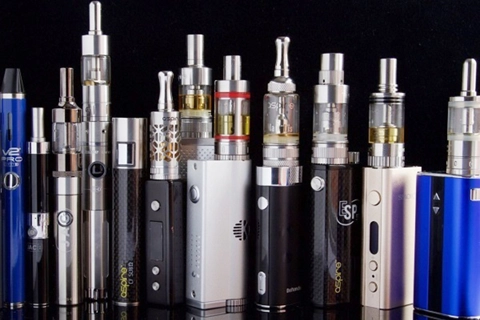
E-cigarettes consist of two main parts: the solution (containing nicotine or tobacco substitute) and the vaporizing device. Currently, there are two types of e-cigarettes on the market: integrated devices with vaporizing liquid and separate devices with separate vaporizing liquid. The first type has already been subject to a 50% MFN tax, while the second type is only now proposed to be taxed at 50% for the vaporizing liquid.
Previously, when formulating the draft decree, the MoF stated that tobacco is a highly sensitive product and subject to specialized management. Therefore, Vietnam's stance, during both WTO accession and FTA negotiations, has been to maintain the committed maximum tax rate on tobacco or, if the reduction is necessary, to delay the application of the reduction as long as possible. This is because tobacco products have a significant impact on human health and need to be restricted.
Vietnam has one of the highest smoking rates in the world, with 38.9% of males over the age of 15 in the country being smokers. Exposure to tobacco smoke remains common in restaurants, bars, and crowded places.
Vietnam's tobacco tax remains relatively low, among the lowest in the ASEAN region. The price of tobacco products is affordable, even as the average per capita income increases. Tobacco products are readily available, and easily accessible to the population, especially youth.
The recent emergence of new-generation tobacco products (e-cigarettes and heat-not-burn tobacco) has altered the market landscape. According to VCCI's assessment, these products in Vietnam are predominantly smuggled.