Hanoi urged to consider urban forest model
Hanoi aims to preserve traditional cultural identities, protect the environment, and strive for sustainability to create a harmonious relationship between rural and urban areas.
Hanoi has been tasked with exploring the concept of compact housing and urban areas that integrate indoor gardens, with the ultimate goal of creating forested downtown areas.
| Deputy Prime Minister Tran Hong Ha speaks at the meeting. Photo: Minh Khoi |

Deputy Prime Minister Tran Hong Ha made the request at a meeting on June 13 to discuss the adjustment of Hanoi's overall planning to 2045, with a vision to 2065.
The Deputy PM urged Hanoi to select a renowned and reputable planning consulting organization with leading experts to define the plan's vision, goals, and driving forces.
The goal is for Hanoi to be on par with the capitals of developed countries in the region and the world, Ha said.
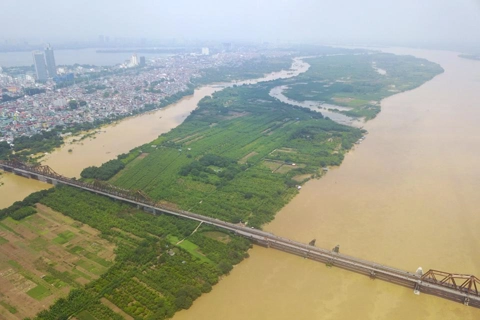
Ha also stressed the need for Hanoi to organize competitions to gather creative ideas for planning the capital and to solicit public opinion. The planning process should mainly focus on underground space and infrastructure and expand the area for new urban development along the Red River axis, Ring Road No.4, No.5, and radial axes.
Hanoi's transportation network will be diversified to include roads, urban rail, air, and waterways, to ensure connectivity and provide guidance for developing new urban areas and satellite cities.
In addition, Hanoi expected the planning to establish criteria and principles for constructing, improving, and renovating existing urban areas and developing new urban areas in line with Hanoi's distinctive planning and architectural style.
It should also create a belt of rural and urban areas that retain their unique identity and harmonize with the natural landscape.
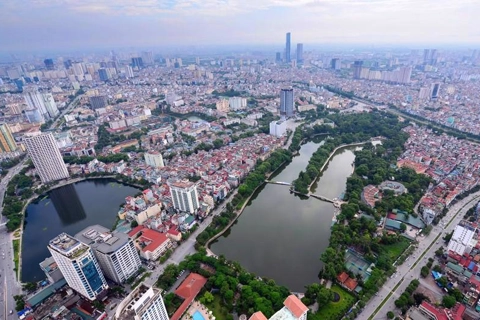
| Hoa Binh Park in Hanoi. Photo: Pham Hung/The Hanoi Times |

At the meeting, Deputy Chairman of the Hanoi People's Committee Duong Duc Tuan said Hanoi's planning aims to transform the city into a modern and smart city that creates positive impacts and connects regions.
"The city wants to become the center and engine for the development of the Red River Delta, the key northern economic area, and the entire country while providing a high standard of living and quality of life for the people of Hanoi," he said.
| Vice Chairman of the Hanoi People's Committee Duong Duc Tuan at the meeting. Photo: Minh Khoi |

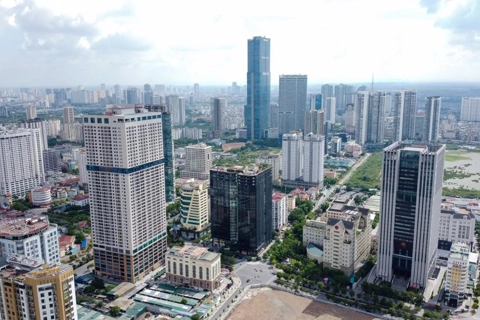
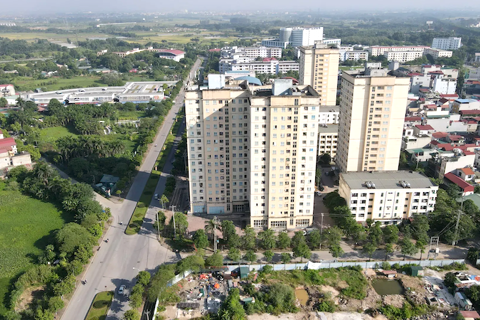
In this context, Tuan expected Hanoi to promote the development of satellite cities under its jurisdiction, strictly control high-rise housing development in the central area, focus on urban renovation, upgrading, and reconstruction, and prioritize the development of urban underground spaces.
In addition, Hanoi will establish a harmonious relationship between rural and urban areas, preserve traditional cultural identities, protect the environment, and strive for sustainability.
"Once the planning task is approved, the city will hire a planning consulting organization, assemble a team of experts and critical scholars, evaluate the current situation, and collect and standardize relevant data," Tuan said.
The compact city concept was introduced in 1973 and became popular in Europe and North America. The compact city model involves concentrated urban development with high density and mixed land use, reflecting the global trend of urban development in the face of limited land resources.
The compact city approach not only emphasizes vertical development, height, and depth to compensate for limited width but also addresses transportation, energy, employment, and comfort in a comprehensive manner. Public transportation plays a critical role in compact cities, reducing reliance on private automobiles while meeting the transportation needs of residents.
Many cities around the world have successfully implemented the compact city model, including Curitiba (Brazil), Singapore, and Tokyo (Japan).