Hanoi's agriculture on the road to differentiation
Once a robust agricultural product base is established, there should be a strong emphasis on technological investment, particularly in deep processing, as a key pillar to elevate the value of agricultural products.
As the nation's capital, many experts believe that Hanoi's agriculture requires a unique approach that is different from other regions in the country.
Nguyen Viet Dang, Secretary of the Party Committee of Dong Ke Village, Tran Phu Commune, Chuong My District, pointed out that the rocky mountainous terrain poses significant challenges to farming in the area.
"Farmers often face difficulties due to the difficult terrain, and the land near Dong Suong Lake is prone to flooding during heavy and prolonged rains. As a result, many are now showing little interest in farming and are choosing to seek work opportunities away from their hometowns to provide for their families," Dang said.
However, the situation has improved significantly over the past 15 years since Hanoi expanded its administrative boundary, thanks to substantial investment in the mountainous ethnic minority commune of Tran Phu.
Nguyen Van Chi, Director of the Hanoi Agricultural Extension Sub-Department, noted that Hanoi's agriculture has made remarkable progress, maintaining positive growth and consistently meeting planned targets. The city has made full use of agricultural land, minimizing waste and leaving no unproductive areas.
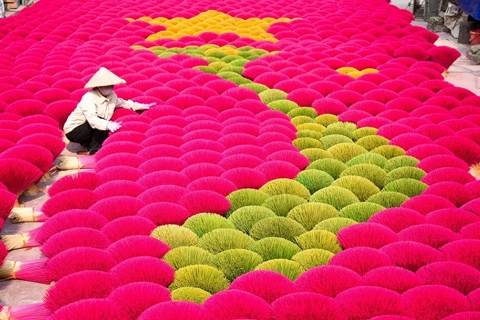
| High-technology orchid cultivation in Me Linh District, Hanoi.Photos: Pham Hung/The Hanoi Times |
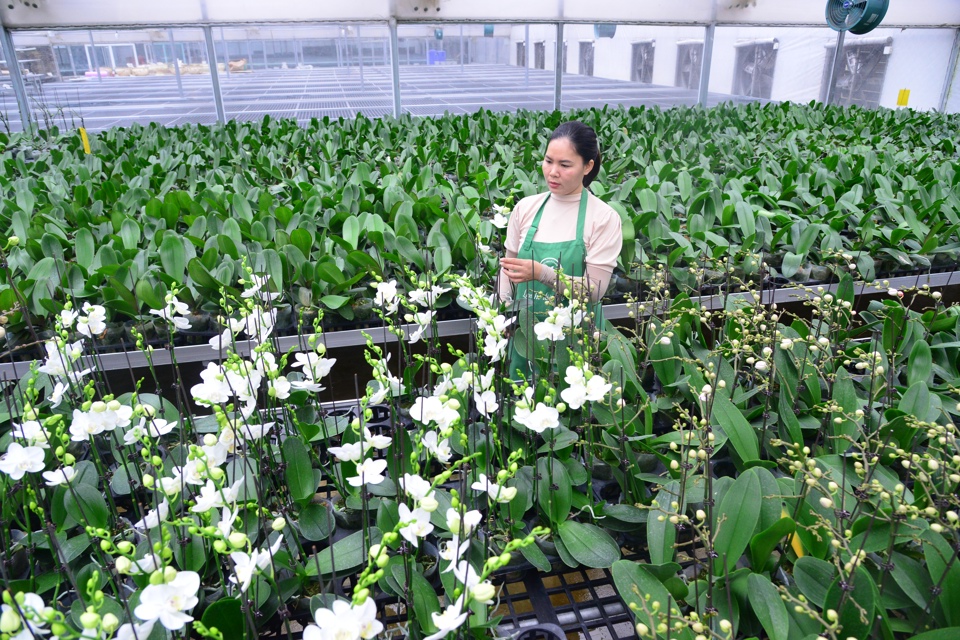
"There has been a shift toward using high-quality crop varieties with greater economic value, replacing low-quality ones. Livestock and poultry numbers have remained stable, while aquaculture has grown rapidly and diversified to meet people's various demands," Chi said.
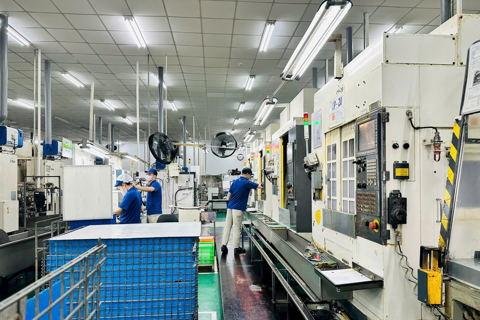
In addition, the city has prioritized the application of science and technology in agriculture, with 167 farms adopting high-tech methods in cultivation, breeding, and aquaculture. About 35% of the total value of the agricultural sector now comes from products produced with advanced technology, he noted.
Hanoi has also established several areas for safe vegetable production, high-quality rice cultivation, fruit-growing, flower and ornamental plant production, and high-quality tea-growing. The scale of agriculture has expanded significantly compared to 15 years ago, with 76 key livestock communes, 3,660 large-scale farms outside residential areas, and 20 safe aquaculture areas contributing to this growth.
Despite significant progress in agricultural development, Hanoi's agriculture is perceived as lacking a distinct identity. The city's agricultural production remains small and fragmented and is in need of a stable consumer market.
Experts suggest that Hanoi should prioritize the development of high-quality seeds and seedlings to supply other regions of the country. They also recommend researching and implementing models of organic and high-tech agriculture with systematic planning and investment.
Supporting policies
Since the expansion of its administrative boundary 15 years ago, Hanoi has issued various policies to promote agricultural growth, in particular, Resolution No.10/2018/NQ-HDND of the Hanoi People's Council on initiatives to promote domestic consumption of local farm products in 2018.
However, this resolution has limitations and inadequacies and is no longer in line with current needs.
In response to a proposal from the Hanoi Department of Agriculture and Rural Development, the People's Council of Hanoi adopted a new resolution in early July to replace the aforementioned Resolution. The resolution aims to provide incentives for enterprises, cooperatives, farm owners, and households to pool their resources to invest in production development. This step-by-step approach aims to comprehensively develop Hanoi's agriculture in a modern, commercial, sustainable, and environmentally friendly direction. In doing so, it will contribute to achieving the goals of restructuring Hanoi's agricultural sector by 2025 and beyond.
Deputy Chairman of the Hanoi People's Committee Nguyen Manh Quyen believes that while the new resolution may not fully meet expectations, "it is the best option at this time."
| Orchids planting in Dan Phuong District, Hanoi. |

Agricultural planning has been an ongoing concern for Hanoi's agricultural industry for years. The Hanoi Department of Agriculture and Rural Development has prepared numerous development plans for specific sectors and fields, but there has been a lack of integration into the city's overall development planning. However, this situation may change with the upcoming draft of the amended Capital Law.
Nguyen Xuan Dai, Director of the Hanoi Department of Agriculture and Rural Development, revealed that the agency is working on a draft plan to implement a new resolution focusing on agriculture, farmers, and rural development.
Once this resolution is approved by the Hanoi People's Council, Dai said, the department will work with local authorities to implement it in the city.
"With the issuance of this new resolution, the role and direction of the agricultural sector in the capital's overall development plans will be clearly defined. This, in turn, will create the necessary conditions for the sector's growth and enable it to gradually establish a unique character that sets it apart from other regions in the country," Dai said.
| “To enhance its agricultural sector, Hanoi should focus on developing specialty crops, livestock, and high-value varieties. Once a robust agricultural product base is established, there should be a strong emphasis on technology investment, especially in deep processing, as a key pillar to increase the value of agricultural products," said former Director of the Ministry of Agriculture and Rural Development Nguyen Xuan Cuong. |