Hanoi's deep processing transformation: Raising agricultural quality and safety
Hanoi districts would strategically plan concentrated raw material zones to strengthen links between regions, farmers and businesses.
The Hanoi Department of Agriculture and Rural Development is providing support to farms to improve production and processing capacity while introducing state-of-the-art quality management programs to ensure food safety and hygiene.
Innovative techniques raise food quality standards
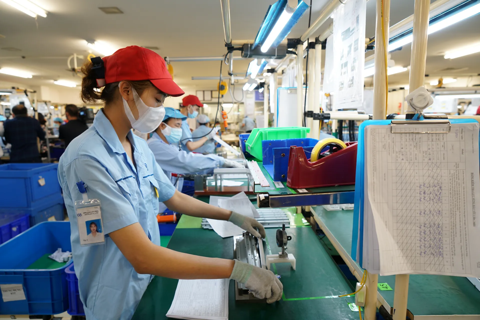
| C.P. Food Processing Plant in Phu Nghia Industrial Park, Chuong My District. Photo: Viet Linh/The Hanoi Times |
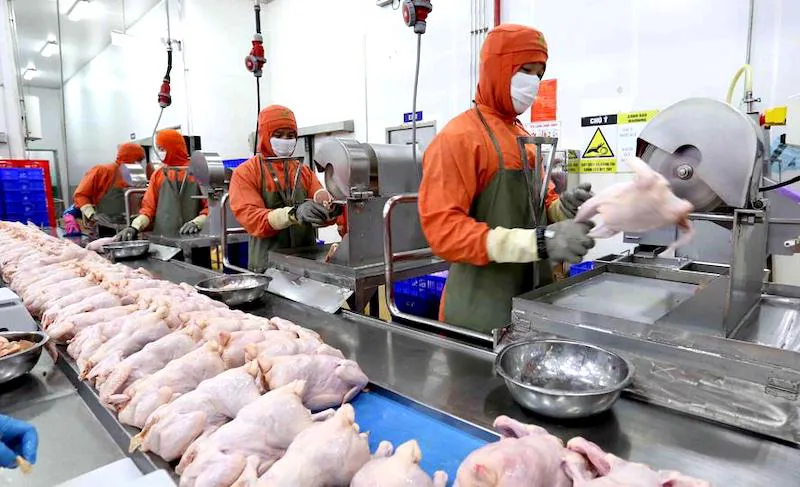
With support from the department, many businesses in Hanoi are stepping up their investment in infrastructure, building state-of-the-art processing plants, cold storage facilities, and preservation units to improve the quality of agricultural products.
To Tuan Kiet, General Director of Videli Food Processing JSC in Dong Anh District, said the company currently produces 13 lines of meat products, including fried sour pork, cartilage sausage, and dumplings, all made using advanced South Korean technology.
This technology guarantees freshness, taste, and faster preparation times for consumers while ensuring food safety. Videli supplies 180 to 200 tons of high quality products to the market every month.
Meanwhile, Le Hoang Vinh, Director of BaViMilk JSC in Ba Vi district, said that to effectively source fresh milk from local farmers, the company has invested in modern production lines that turn fresh milk into yogurt and milk cakes.
He emphasized the company's commitment to comprehensive food safety practices based on HACCP standards, rigorous training, and workshops for employees, and ensuring that all products are traceable and labeled to international standards.
Nguyen Thi Thu Hang, Director of the Hanoi Agro-Forestry and Fisheries Quality Management Sub-Department of the Hanoi Department of Agriculture and Rural Development revealed that the city is home to about 250 deep-processing enterprises out of more than 14,000 agricultural and aquaculture production and business units.
The city has 113 cold stores, including seven large warehouses of almost 30,000 square meters and 106 smaller ones totaling over 5,300 square meters.
Recently, the agricultural sector has been actively encouraging food producers and businesses to embrace technological innovation and upgrade their equipment and facilities to ensure the safe production and distribution of food.
Moreover, the Hanoi Department of Agriculture and Rural Development has been instrumental in helping these companies implement advanced quality management programs such as VietGAP, HACCP, and ISO 22000 to improve product quality, food safety and hygiene.
To date, the department has successfully assisted 95 enterprises in developing and certifying their advanced quality management practices under HACCP, while 45 enterprises have received assistance in registering trademarks with the Intellectual Property Office of Vietnam (Ministry of Science and Technology).
"Post-harvest processing is increasingly recognized as a vital focus for modern agriculture, significantly increasing the value of agricultural products and minimizing the risks of loss during production and processing," the department said.
Focusing on high-potential products in processing sector
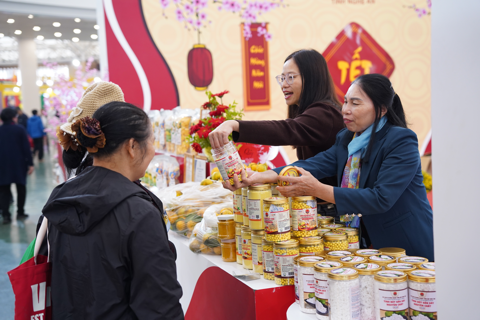
| Presentation of the Coffilia product to visitors at a factory in the Ngoc Hoi Industrial Park, Hanoi. Photo: Hoang Anh/The Hanoi Times |
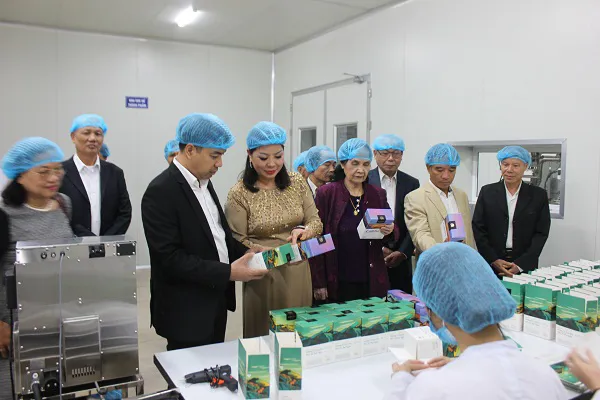
Hanoi currently produces only 1,000 tons of processed food per month, while the city's residents consume about 5,350 tons, meaning the capital only meets about 20% of its needs.
Duong Chu Kien from the Business Department of Minh Tien Group JSC (Dong Da District) suggested that in order to attract enterprises to invest in deep processing, local authorities should help enterprises access preferential financing.
"In addition, they should actively identify and address challenges during implementation to quickly provide solutions to streamline the loan process and financial support," the business executive added.
She emphasized that for a robust supply chain, local authorities need to strategically plan cultivation and breeding zones, adopt innovative technologies throughout the production process, and ensure that products are green, clean, and of high quality. This will enable companies to efficiently connect with farmers to source fresh produce during the harvest season.
Nguyen Xuan Dai, Director of Hanoi's Department of Agriculture and Rural Development, revealed that the city will focus its investments on deep processing for high-potential products with large production areas.
He emphasized that the focus for fruits will be on dried bananas and orange and grapefruit juice; for vegetables, the focus will shift to spices and health products; and for livestock, the goal will be to process a variety of pork products.
In 2023, the Hanoi People's Council issued Resolution No. 08/2023/NQ-HĐND, which introduced a series of measures to promote agricultural development, including incentives for the establishment of pre-processing facilities and support for machinery and equipment for digital transformation.
Currently, the department is actively working with localities to assess demand and guide businesses to take advantage of preferential financing for investments in deep processing. Innovative and agile companies, along with cooperatives, are seeking markets for their products while streamlining production to avoid agricultural surpluses.
Local insiders emphasized that to ensure a reliable supply of processed food in the long term, the government should encourage large companies to invest in infrastructure for high-tech agricultural production and services.
This includes the modernization and construction of state-of-the-art slaughterhouses, pre-processing facilities, and processing plants to improve food quality and gradually achieve self-sufficiency in processed agricultural products.
To seize opportunities and enhance competitiveness, local companies need to invest in cutting-edge equipment and technology to improve their processing capabilities. Localities should also strategically plan concentrated raw material zones to strengthen links between regions, farmers, and enterprises, and create stable supply chains for deep processing that meet food safety standards for both domestic consumption and export, according to local insiders.
Hanoi is actively expanding its network of safe agricultural production and consumption chains, which currently includes 159 chains—53 focused on meat products and 106 on vegetables. This initiative has attracted a diverse range of enterprises, cooperatives, and farmers, creating a strong ecosystem for safe food. The city has also established over 40 protected trademarks, such as Ba Vi Hill chicken, Soc Son chicken, and Dai Thanh lychee, which promote local specialties and ensure product quality. In collaboration with 43 provinces, the Hanoi Department of Agriculture and Rural Development is developing 926 safe food supply chains for the capital. Furthermore, the department is working with various sectors and localities to promote 58 models for safe agricultural production, including organic farming, VietGAP certification, and the use of high technology in agriculture. To support these initiatives, the Hanoi People's Committee will allocate over VND10 billion (approximately US$390,000) to help districts acquire essential machinery and equipment for digital transformation in agriculture. This year, the program will focus on seven districts, assisting 28 farms with a budget exceeding VND3.6 billion (about US$140,000). Looking toward 2025, the initiative plans to expand to eight additional districts, supporting 49 businesses with a budget of over VND6.5 billion (around US$250,000). Hanoi’s agricultural sector remains committed to empowering producers, processors, and manufacturers in farming, forestry, and aquaculture, while fostering the use of information technology to create secure and efficient agricultural supply chains. |