Hanoi’s East, West emerged as new focal points of growth
The future supply in both the west and the east will account for 40% of the market share of residential units in Hanoi.
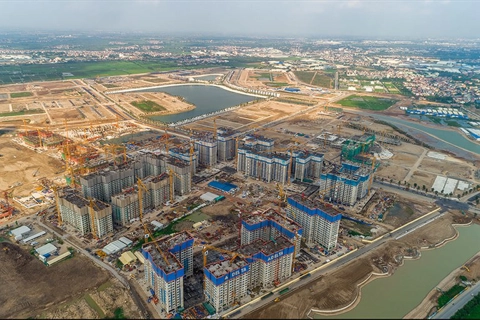
| A corner of Dong Anh district. Photo: Thanh Hai/The Hanoi Times |
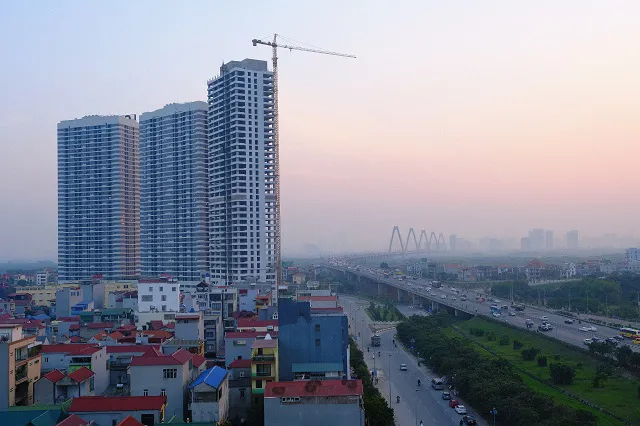
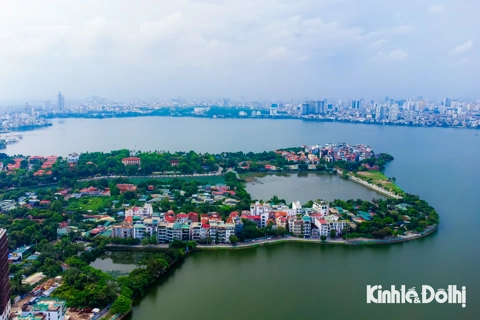
A report by Savills has highlighted West Hanoi as an area with a modern urban landscape. Numerous ministries, branches and enterprises have moved there, creating a hub for domestic and foreign businesses. As a result, the area has become an attractive place to live.
Significant infrastructure progress in the West, including To Huu - Le Van Luong Road, Ring Roads No. 2 and 3, the upcoming Ring Roads No. 3.5 and 4, Thang Long Boulevard, and the urban rail projects have boosted real estate projects.
Prominent large-scale projects such as The Manor Central Park, Vinhomes Green Bay, Vinhomes Thang Long, and Mailand Ha Noi City have flourished along these routes.
Do Thu Hang, senior director of research & consulting at Savills, noted that the West, particularly the districts of Bac Tu Liem, Nam Tu Liem, and Cau Giay, has consistently held a dominant supply share of about 30% of the market since 2011.
She added that this area is the main provider of office space in the capital, accounting for 50% of the market share, equivalent to 873,700 square meters.
"The West remains a central point for Hanoi's future development, with a focus on improving quality, upgrading transport infrastructure and creating a more attractive landscape to alleviate overcrowding and traffic pressure in the core districts," Hang said.
At the same time, Hanoi has strategic plans to expand eastward, including the construction of ten large bridges across the Red River to reduce travel time to other parts of the city and increase the attractiveness of the east, boosting demand from neighboring areas.
In addition, an initiative to control population density in the historic downtown area aims to reduce the population from 1.2 million (2009) to an expected 672,000 (2020-2030).
Consequently, housing projects will benefit from this migration. Enabled by convenient transportation and favorable infrastructure, many residents have moved from the historic center to adjacent neighborhoods, particularly to the east.
The eastern zone, which includes Long Bien and Gia Lam districts, boasts abundant land reserves, advanced infrastructure, and housing projects by major real estate developers such as Vingroup and Ecopark. This location has lured buyers away from downtown Hanoi. The share of residential supply in the East in the total market has increased from a meager level in 2011 to 12% in the first half of 2023.
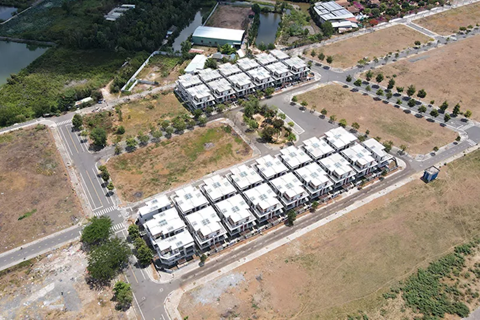
This region also claims a significant share of low-rise housing supply, which has risen from 8% in 2014 to 15% in the Hanoi market as of June 2023.
Savills highlights the differences in home prices between these regions. In the West, the average apartment price reached VND58 million ($2,416)/m2 in the first half of 2023, while in the East, the average price is around VND48 million ($2,000)/m2.
For low-rise properties, the price in the West ranges from VND157 million to VND225 million (US$6,541-9,275)/m2 of land, while the price in the East ranges from VND158 million to VND168 million (US$6,583-7,000)/m2 of land.
According to Hang, the difference between the East and West is the result of the East's later but faster growth.
Looking into the future, the Savills expert points out that the upcoming supply in both the west and east will account for 40% of the residential market share. In addition, real estate products in these areas, and in Hanoi as a whole, will be upgraded.
"Emphasis will be placed on internal amenities within apartment projects, and the product range will diversify to include studios, duplexes, penthouses, and dual-key configurations. The market has also seen the involvement of international investors and branded apartment products are beginning to make their presence felt," she noted.