Hanoi's safe vegetable models benefit locals
Safe vegetable production models in Hanoi are proving to be a viable way to restructure crops, create jobs, increase incomes, and improve living standards for residents.
Many cooperatives in Hanoi are helping farmers thrive on their own land thanks to a focus on implementing technological solutions and connecting production and consumption in a "green, clean, and modern" way.
The production of safe vegetables is a key priority in the agricultural restructuring plan, which aims to create a modern and sustainable farming sector.
Profits from safe vegetable production
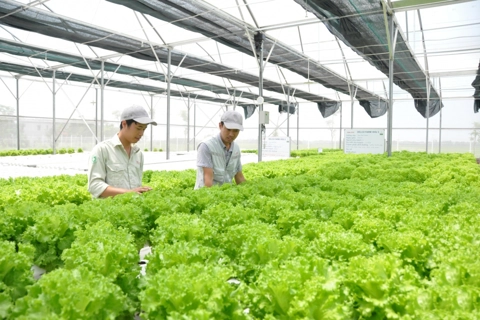
| Vegetable farming area of the Hoa Binh General Services Cooperative. Photo: langngheviet.com.vn |
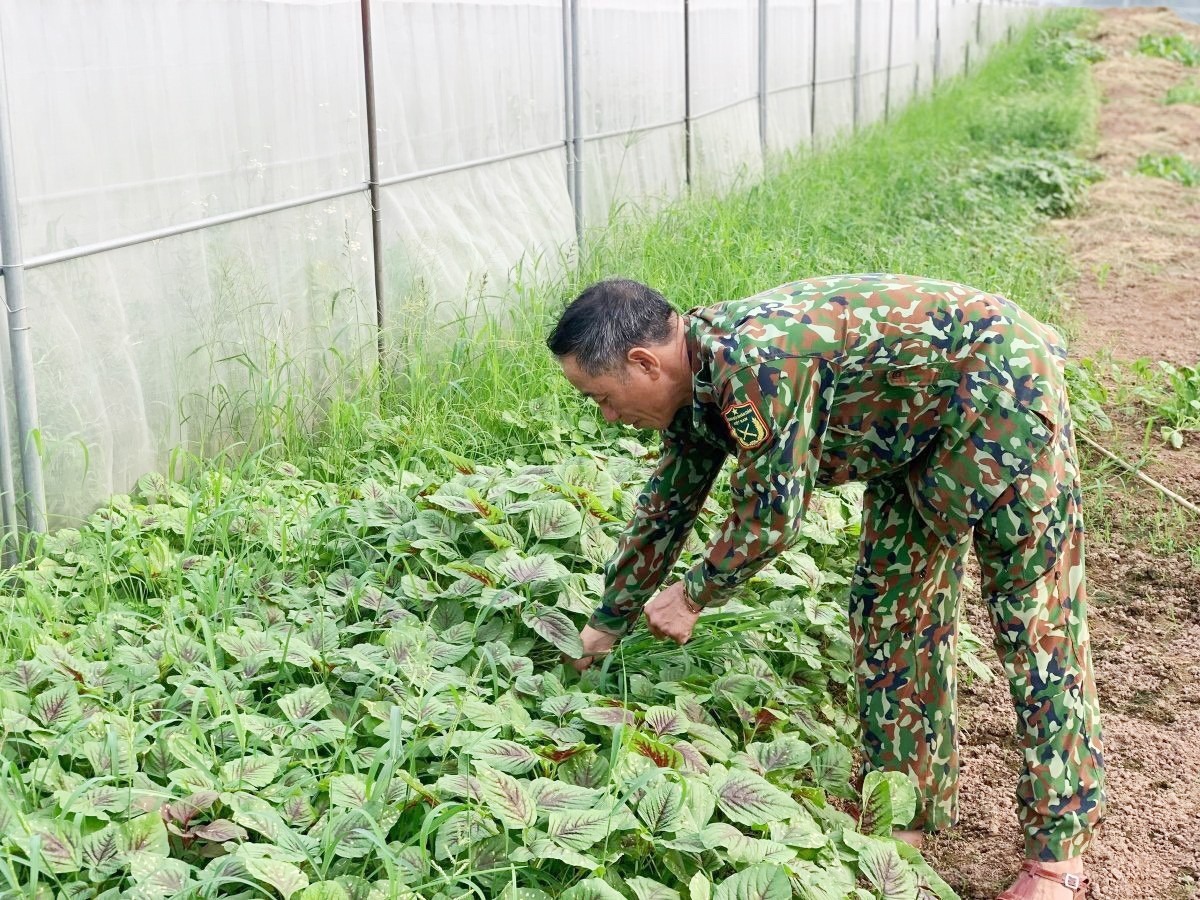
Farmers in Yen Nghia Ward, Ha Dong District, used to practice traditional farming methods. However since the Hoa Binh General Services Cooperative introduced the VietGAP vegetable farming model, it has secured a reliable market for its members' and local farmers' produce.
Trinh Van Vinh, Director of the Hoa Binh General Services Cooperative, said the cooperative has attracted 500 members who cultivate a total area of 53.8 hectares, including 22 hectares for spring vegetables, of which 11.7 hectares meet VietGAP standards.
Currently, the cooperative produces approximately 640 tons of assorted vegetables and fruits annually, generating nearly VND4 billion (US$157,516) in revenue and helping dozens of families escape poverty and build sustainable livelihoods.
Hoang Trung Dung from Street 6 in Yen Nghia Ward said that his family has been growing vegetables since 2008 without much profit. After switching to safe vegetable farming, their lives have vastly improved. With profits tripling compared to previous years, Dung's family has expanded their farming area.
With nearly 1,500 square meters of land, Dung has reserved a portion for VietGAP vegetable production, while the rest consists of various seasonal leafy greens, including water spinach, amaranth, mustard greens, and others.
He noted that most farmers are currently enjoying favorable market conditions. The cooperative buys 100% of his family's vegetable output with VietGAP produce consistently fetching more per kilogram than other safe vegetables. On average, his family harvests 100 kilograms of vegetables daily, earning about VND30 million ($1,181) per month, with potential profits of more than VND10 million ($393.9) under favorable price conditions.
Dung said the cooperative has set up a network to ensure the sale of safe vegetables, supplying 30 preschools in Ha Dong District and several businesses. Every day, the cooperative sells between 800 kilograms and one ton of vegetables and fruits. However, this is only 70% of the total production, leaving 30% for members to find buyers on their own.
"To stabilize sales, we hope that the Hanoi Sub-Department of Crop Production and Plant Protection and relevant local authorities will help them find potential buyers so that members can focus on increasing productivity and product quality," he said.
VietGAP cultivation drives income growth
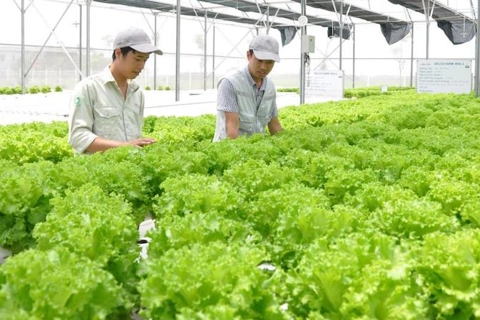
| A farm of Chuc Son Clean Vegetable and Fruit Cooperative. Photo: Chuc Son Clean Vegetable and Fruit Cooperative |
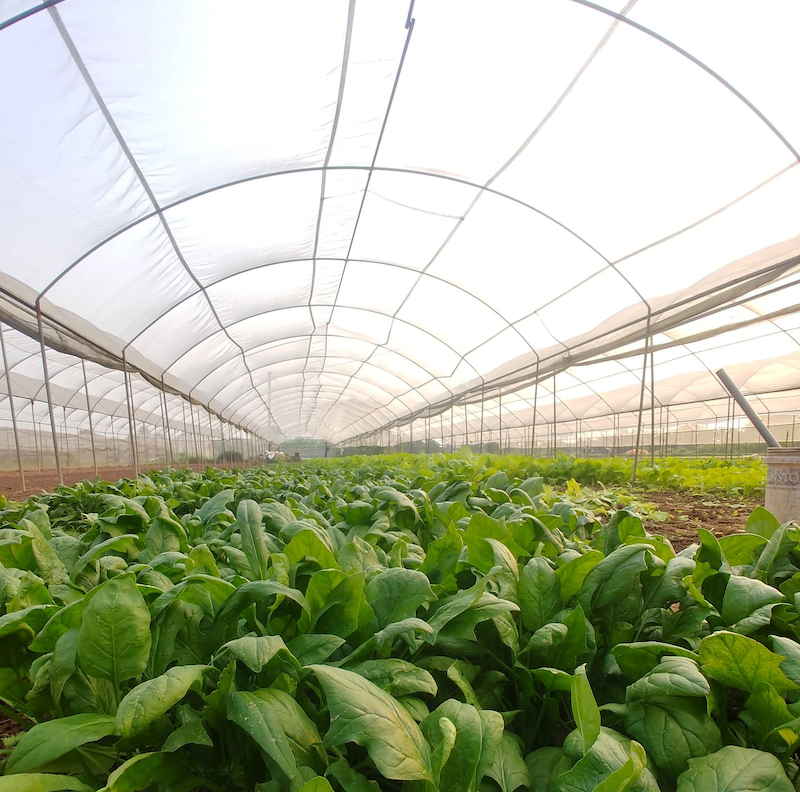
Traceability and product transparency are the core elements of the brand of the Chuc Son Clean Vegetable and Fruit Cooperative in Chuong My District, requiring each household in the cooperative to adhere to the "four rights" principle (the right pesticide, the right dosage, the right timing, and the right method), said Director of the cooperative Hoang Van Tham.
The cooperative supports its members by selling products and providing services and materials. It also conducts regular training for farmers on planting techniques to ensure compliance with VietGAP and GlobalGAP standards, as well as on product presentation and quality to meet required criteria.
To ensure compliance with safety regulations, the cooperative implements a quality monitoring process that involves multiple stakeholders. Members of the cooperative monitor each other in the fields on a daily basis.
In addition, production managers conduct regular inspections, while customers can conduct unannounced inspections at least once a quarter. Supermarkets that purchase vegetables from the cooperative also conduct daily spot checks, and government agencies take samples for testing at least every six months.
He said the cooperative started with just a few households but has now attracted 52 members, with plans to increase that number to 100 in the near future.
"We draw members based on two core values. First, members' incomes must increase once they join the cooperative. They focus solely on production according to a common plan, while the cooperative handles sales. So far, all participating farmers have increased their annual income by at least 5-10%, while improving productivity by 20-25%," said Tham.
At present, the cooperative supplies about 3.5 tons of vegetables per day directly to customers, including two Lotte supermarkets and 21 of the Go!/Big C and Tops chains, as well as four companies, 18 schools, and three hospitals in Hanoi. Its diverse product range is stable in supply and seasonal in availability.
As a cooperative member, Hoang Van An of Giap Ngo Street in Chuc Son Town has over 2,000 square meters of high-tech greenhouse for growing melons. "With market prices at VND40,000 ($1.6) per kilogram, my first melon harvests earned me over VND50 million ($1,968) after expenses. In other seasons, I've made nearly VND100 million ($3,939) per 1,000 square meters," he said.
Meanwhile, cooperative member Hoang Van Vi said all his family's products are bought at a fixed price of VND8,000 ($0.3) per kilogram. As a result, his family has generated more than VND200 million ($7,787) per year.
Building consumer trust
Safe vegetable production models in Hanoi are proving to be viable ways to restructure crops, create jobs, increase incomes, and improve the living standards of local residents while contributing to environmental protection.
Luu Thi Hang, Head of the Hanoi Sub-Department of Crop Production and Plant Protection, said that safe and organic vegetable production models are of high quality and safe for consumers, and have received positive market response.
The sub-department will continue to collaborate with localities to provide training on advanced techniques for organic vegetable production, with the aim of improving knowledge and strengthening the use of organic products, biological pesticides, and effective organic fertilizers in agriculture.
In addition, local authorities are encouraged to plan and allocate sufficient land in suitable areas (with adequate soil, water, and air conditions) for organic vegetable production, and to enhance their appeal for investment in this sector, she said.
Nguyen Manh Phuong, Deputy Director of the Hanoi Department of Agriculture and Rural Development, said cooperatives and farmers need to focus more on developing and protecting the brand of safe vegetables to build consumer confidence.
"Our department would continue to work with localities to plan special areas for safe vegetable production, and establish mechanisms and policies to support large-scale and concentrated production linked to preservation, processing, and product consumption," said Phuong.
To expand safe and organic vegetable production models, the Hanoi People's Committee issued Plan No. 220/KH-UBND on August 15, 2022, outlining the development of organic agriculture from 2022 to 2025, with a vision to 2030.
By 2030, the city aims to have 515 hectares of organic vegetables, including 138 hectares certified and 377 hectares transitioning to organic practices. The plan also includes refining technical processes that integrate high technology with local knowledge to ensure organic production is aligned with value chains.