Log in
Business

Hi-tech farms to drive Hanoi’s agricultural growth

Looking ahead to 2030, Hanoi envisions mastering key high-tech innovations, managing production through integrated value chains, and nurturing high-tech agricultural models.

Hanoi, in its program No. 07-CTr/TU by 2025, will have more than 70% of its agricultural output coming from high-tech products.

Currently, this proportion is only 46%, indicating that significant efforts are needed in technology application and transfer.

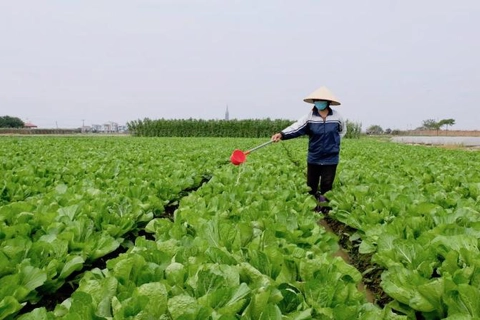
 Safe vegetable plantation in Gia Lam District, Hanoi. Photo: Anh Ngoc/The Hanoi Times

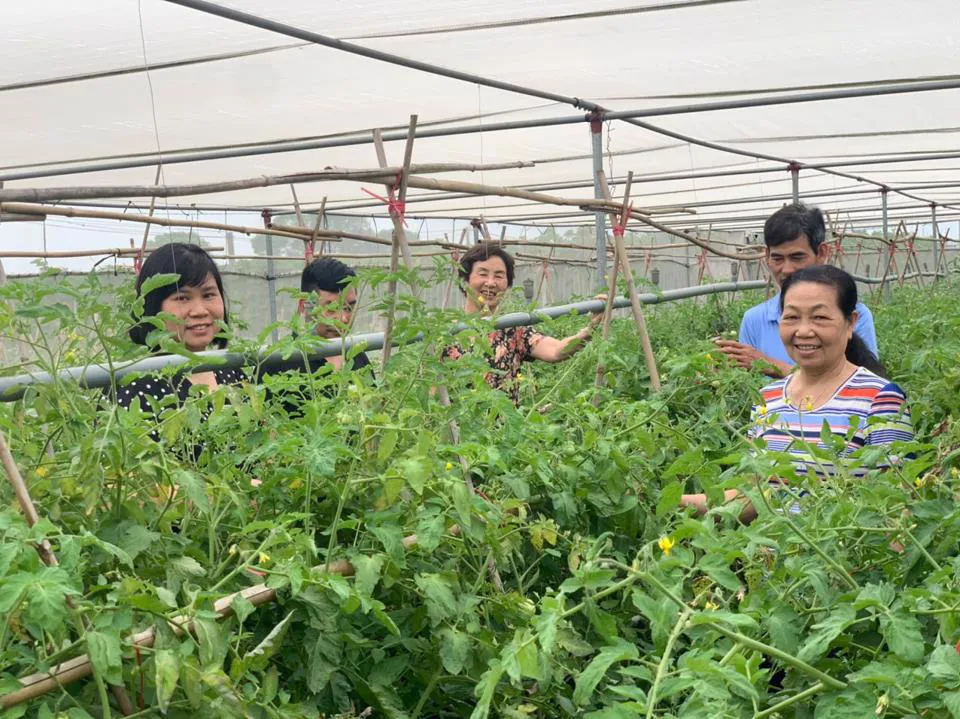
According to the Hanoi Department of Agriculture and Rural Development, the city has cultivated 406 pioneering models of high-tech agriculture, with 262 crop production initiatives, 119 livestock enterprises, and 25 aquaculture projects, mainly in Hoai Duc, Me Linh, Gia Lam, Thuong Tin, Dong Anh, and Thanh Oai districts. At the forefront of this transformation is Kinoko Thanh Cao Import-Export Company, a pioneer in applying high technology to agricultural production. 

The city has also supported the creation of 68 high-tech agricultural cooperatives that are closely integrated with the consumption and quality standards of their products. 


Despite these advances, hi-tech agriculture in Hanoi remains largely small-scale. While these innovative products boast impressive yields and quality, replicating successful models remains a significant challenge. Many businesses are reluctant to enter hi-tech agriculture, hampered by financing issues and land constraints.

Nguyen Xuan Dai, Director of Hanoi's Department of Agriculture and Rural Development, said the department is working on an ambitious "Plan for the Development of High-tech Agriculture in Hanoi by 2030". 

He added that this forward-thinking strategy aims to revolutionize seed production, farming practices, and agricultural processing, paving the way for a modern and sustainable agricultural landscape in the capital.

Looking ahead to 2030, Hanoi envisions mastering key high-tech innovations, managing production through integrated value chains, and boosting high-tech agricultural models, Dai pointed out.

The city aims to establish about 30 high-tech agricultural cooperatives and to nurture at least 40 enterprises in this dynamic sector. It also plans to create 250 high-tech agricultural cooperative models, all linked to sustainable development and value enhancement.

Dai emphasized that products from high-tech agricultural enterprises must not only meet strict safety and environmental standards but also obtain international certification. This commitment will increase the value of products and solidify the competitive edge of Hanoi's agricultural offerings both domestically and globally.

Achieving these goals will both drive the growth of high-tech agriculture and ensure stable incomes for farmers, ultimately contributing to a modern and sustainable agricultural future for the capital, the director said.
Reactions:
Share:
Trending
Most Viewed
Related news
Hanoi to expand hi-tech farming models

Hanoi to expand hi-tech farming models

27 Feb, 16:39

Hanoi plans to build a sustainable and modern agricultural sector, focusing on large-scale production with high productivity, quality, and competitiveness.

Inclusive innovation must give everyone equal voice, experts say at TECHFEST Vietnam 2025

Inclusive innovation must give everyone equal voice, experts say at TECHFEST Vietnam 2025

Open innovation is becoming a cornerstone of Vietnam’s development strategy, as policymakers, experts and international partners emphasize people-centered collaboration to tackle inequality, climate change and urbanization through inclusive, technology-driven solutions showcased at TECHFEST Vietnam 2025.

Vietnam attracts $400 million in venture capital as tech startups surge

Vietnam attracts $400 million in venture capital as tech startups surge

Vietnam’s startup ecosystem continues to expand rapidly, with strong venture capital inflows and fast growth in digital, AI and green technologies, reinforcing the country’s appeal to global investors.

Vietnamese policymakers push for early launch of gold exchange

Vietnamese policymakers push for early launch of gold exchange

A transparent gold exchange would not only offer a safe investment channel for the public but also provide a foundation for Vietnam to become a regional hub for jewelry manufacturing and exports.

Rosatom commits to advanced-technology Ninh Thuan 1 nuclear plant in Vietnam

Rosatom commits to advanced-technology Ninh Thuan 1 nuclear plant in Vietnam

Rosatom will transfer technology, localize nuclear products in Vietnam and support the development of the country’s nuclear science and industry for peaceful purposes.

Hanoi accelerates innovation reforms to become favorite destinations for investors, technology talents

Hanoi accelerates innovation reforms to become favorite destinations for investors, technology talents

Hanoi is pushing forward a wide range of innovation-driven reforms and investment initiatives as it works to become one of the world’s most attractive destinations for high-tech and strategic investors.

Vietnam mulls sharp rise in casino entry fee for locals

Vietnam mulls sharp rise in casino entry fee for locals

Such higher rates are intended to discourage individuals without adequate financial capacity from entering casinos.

Vietnam’s export strength in 2025 builds solid momentum for 2026 growth

Vietnam’s export strength in 2025 builds solid momentum for 2026 growth

With trade turnover nearing the US$900-billion mark, Vietnam enters 2026 with renewed confidence despite global volatility, rising trade barriers and shifting supply chains. Deputy Director of the Import–Export Department Tran Thanh Hai has outlined the drivers of this growth and the priorities for sustaining momentum next year.

Vietnam sets new trade record as import–export turnover nears $840 billion

Vietnam sets new trade record as import–export turnover nears $840 billion

Vietnam recorded its highest-ever trade performance in January-November as import–export turnover surged, driven by strong export growth and a continued trade surplus.