IFAD promotes sustainable agriculture in Mekong Delta
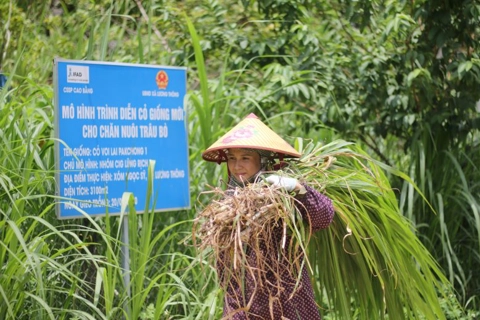
The project enables small-scale farmers to earn more income by moving from subsistence farming to climate-resilient agriculture.
The International Fund for Agricultural Development (IFAD) and Vietnam have just signed an agreement on the Climate-smart Agricultural Value Chain Development (CSAT) project to promote inclusive and sustainable agricultural growth in the Mekong Delta.
The project will generate sustainable income opportunities and improve rural livelihoods for 60,000 families engaged in small-scale farming.
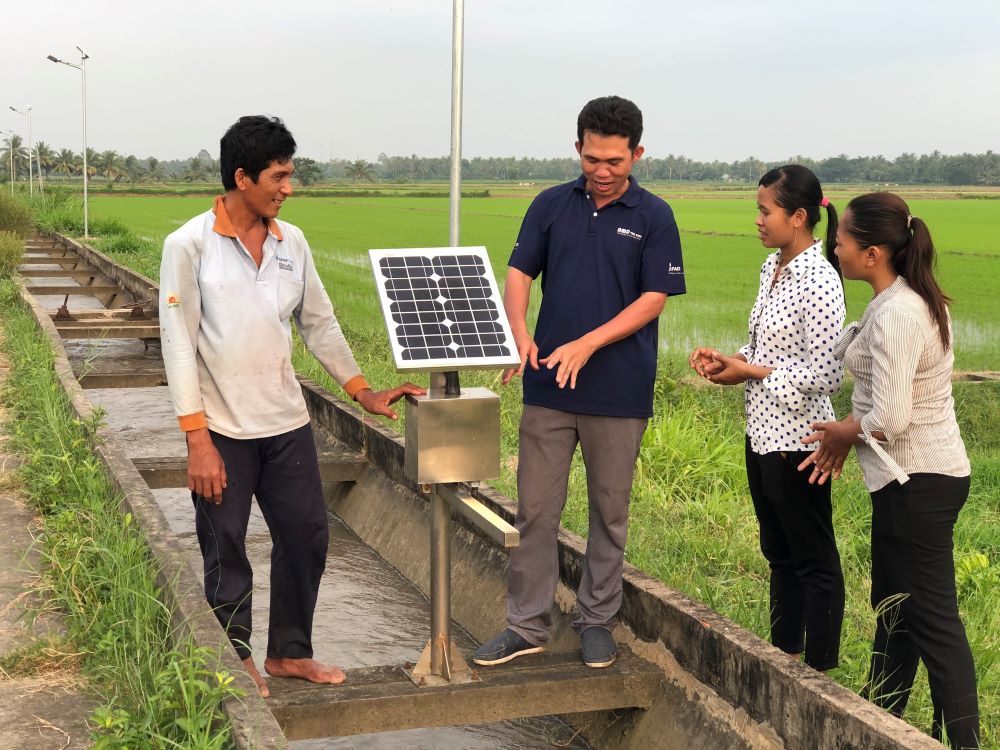
| Monitoring buoys provide early warning of saltwater intrusion in the Mekong Delta. Photos: Hoang Pham |
Though Vietnam has made impressive progress in reducing poverty over the last 30 years, most of the country’s poor (86%) live in remote and mountainous areas. The average income per capita in rural Vietnam is less than half that in urban areas. While agriculture, which employs 37% of the population, has contributed greatly to economic growth, it has also been characterized by the unsustainable exploitation of natural resources.
In the Mekong Delta, overuse of surface and groundwater is leading to water scarcity. Climate change effects such as rising sea levels, droughts, and increasing temperatures have taken their toll on agriculture as well.
“Vietnam’s small-scale farmers, particularly in the Mekong Delta, face multiple challenges, including volatile food and fuel prices and the effects of climate change,” said Ambrosio Barros, IFAD Country Director, Vietnam. “Our goal is to enable small-scale farmers, and especially rural women and youth, to move from subsistence farming to climate-resilient, market-oriented agriculture, enabling them to earn increased, sustainable incomes,” he added.
Rural households in the Mekong Delta have limited access to water infrastructure, insurance, and climate-sensitive agro-advisory services to mitigate risks – a critical gap in a low-lying river delta identified as one of the most vulnerable to climate change, notably in terms of sea level rise, droughts, extreme heat, and severe storms.
CSAT will invest in the climate-resilient infrastructure needed to develop inclusive and sustainable value chains. It will support better access to financial and extension services and encourage small-scale farmers to adopt environmentally sustainable and climate-resilient technologies, including efficient water usage. CSAT will also work to integrate climate resilience more strongly in provincial and regional planning.
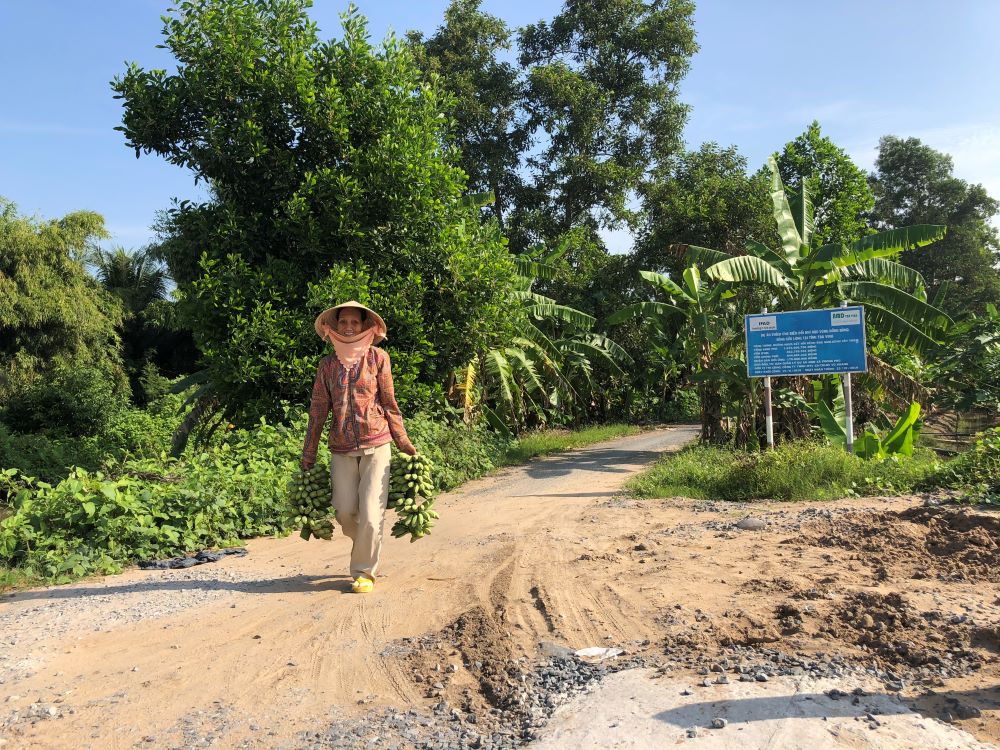
| A new road for locals in the Mekong Delta. |
IFAD is providing a US $43 million loan towards the total project cost ($136.4 million) over 5 years. In addition, the Dutch Fund for Climate and Development is providing $40.01 million, and the national government is providing $17.87 million, with $4.6 million contributed in kind by project participants. Additional private sector financing will be available for producer groups and investments in small and medium enterprises and value chain development.
In Vietnam, IFAD has supported 17 projects directly benefitting 738,470 households, at a cost of US$788.10 million with an IFAD loan of $463.49 million. It focuses on activities that have the greatest impact on residual poverty in rural areas, developing market-led innovations that aid poor people.
IFAD is an international financial institution and a United Nations-specialized agency. Based in Rome – the United Nations food and agriculture hub – IFAD invests in rural people, empowering them to reduce poverty, increase food security, improve nutrition, and strengthen resilience.