More efforts needed to further budget transparency of State agencies: Experts
In contrast to steady endeavors by provinces/cities to improve efficiency and fairness in budget management, the performance of State agencies in this regard has left much to be desired.
More efforts are required to continue improving transparency in the budget management of ministries and ministerial-level agencies.
Director of the Vietnam Center for Economic and Strategic Studies (VESS) Nguen Duc Thanh made the statement at the launch of the 2020 Ministry Budget Index (MOBI) on June 16, aiming to assess the transparency level in budget management of 44 state agencies.
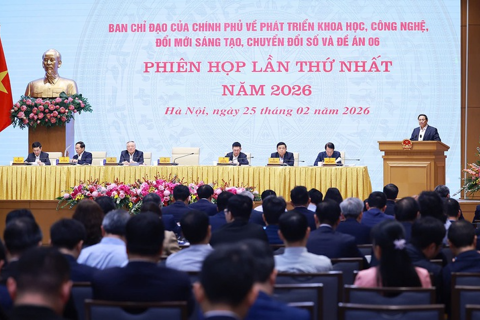
| Overview of the online conference. Photo: Nguyen Tung |

“In contrast to steady endeavors of provinces/cities to improve efficiency and fairness in budget management, the performance of State agencies in this regard has left much to be desired,” Thanh said, referring to the average score in MOBI 2020 at 21.64, around the same level recorded in last year’s report.
Making clear of the significance of budget transparency, Nguyen Thu Huong, senior program manager of Oxfam in Vietnam considered such practice a must to ensure public participation in budget governance.
“This would help improve efficiency and greater fairness in budget allocation while opening the door for Vietnam to further join international financial markets and gain access to investment capital,” Huong said.
The 2020 MOBI report was jointly launched by two members of the Budget Transparency, Accountability and Participation (BTAP) Alliance, the Vietnam Institute for Economic and Policy Research (VEPR), and the Center for Development and Integration (CDI).
Similar to the 2020 Provincial Open Budget Index (POBI), state agencies were grouped into four categories from A [full disclosure] with scores in the range of 75-100, to B [moderate disclosure] with scores from 50-75, C [insufficient disclosure] with scores of 25-50 and D [low disclosure] for those scoring less than 25 points.
Vice Director of CDI Nguyen Quang Thuong noted in this third-year edition, the Ministry of Finance stood at the top spot with 66.63 points, or “moderate disclosure”. The Ministry of Justice and State Audit claimed the second and third places by scoring 48.41 and 41.42, respectively, or having disclosing budget information at an insufficient level.
“From a total of 44 State agencies under assessment, ten were not included in the ranking as they do not disclose any budget information at all on their respective online portal,” Thuong added.
On the criteria of timely publication of budget documents, only six have complied with the regulation of issuing documents within 15 days.
To further improving transparency scores among state agencies, Thanh from VESS called for the National Assembly to step up its supervision role for greater openness and transparency of the public finance sector.
On the issue, Deputy Director of the National Assembly Commission on People’s Petitions Luu Binh Nhuong admitted the lack of compliance with budget transparency regulations of central agencies’.
“Greater accountability is key to address delay or failure to publish budget information in every government agency,” Nhuong suggested.