PM orders no fuel shortage under any circumstances
Fuel supply remains sufficient to meet consumer and business needs.
Prime Minister Pham Minh Chinh has requested that there be no shortage of fuel supply under any circumstances and that fuel prices must be regulated according to the established rules.
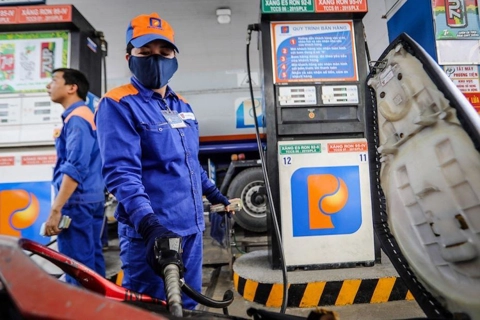
| A petrol station in Hanoi. Photo: Nguyen Vu/The Hanoi Times |
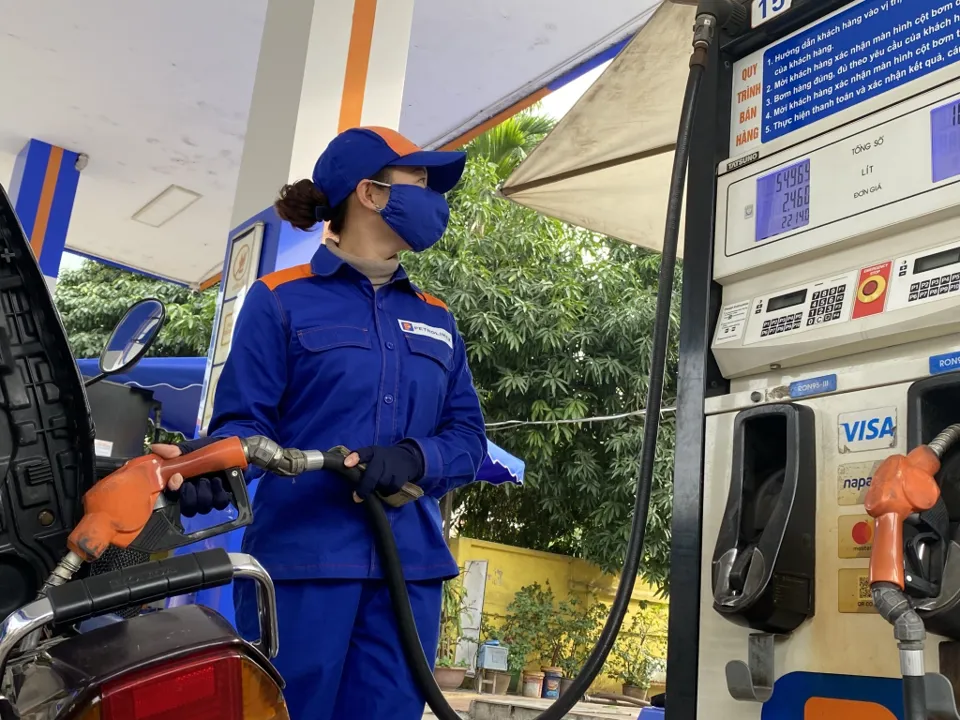
Since the beginning of the year, 16 fuel distribution companies have surrendered their business licenses. In a directive issued on June 23, Prime Minister Pham Minh Chinh instructed the Ministry of Industry and Trade (MoIT) to ensure a stable domestic fuel supply.
"There must be no shortage of fuel in any situation, and market controls and monitoring must be intensified," the directive stated.
There are currently around 300 fuel distribution companies in the market, about 10% fewer than at the end of 2023. These companies purchase fuel from key suppliers and sell it through their own retail outlets and through their networks of agents and franchisees.
According to the MoIT, the decision by some distributors to surrender their licenses was voluntary, following a review in which they were found not to have met business conditions. The Ministry said that this development does not affect the market.
In the second quarter, the total volume of imported and domestically purchased fuel was approximately 6.35 million cubic meters or tons. Consumption during this period was about 6.3 million cubic meters or tons. Fuel stocks were between 1.7 and 1.8 million cubic meters or tons. With this level, the MoIT confirms that the fuel supply is sufficient to meet consumer and business needs. The regulatory body will implement measures to ensure a stable fuel supply.
Regarding electricity prices and healthcare services, Prime Minister Pham Minh Chinh emphasized that relevant ministries should review and assess the impact of any price adjustments on the economy and society in collaboration with the General Statistics Office. This is to prevent cost-push inflation and inflationary expectations in the economy.
Previously, Deputy Prime Minister Le Minh Khai requested that ministries develop scenarios for adjusting electricity and healthcare service prices in June to avoid being caught unprepared.
For the food sector, the Prime Minister ordered close monitoring of production, input price fluctuations, and demand, with a view to promptly balancing supply and demand. As with fuel, the directive stressed that there should be no shortage or scarcity of food and essential goods under any circumstances.
In the aviation sector, the Ministry of Transport has been instructed to implement measures to ensure and stabilize air transport capacity, especially during the upcoming peak summer period in 2024.
Beyond management directives, the Prime Minister also called for strict action against those spreading false information that could cause consumer panic and market instability.
In May, the Consumer Price Index (CPI)—a measure of inflation—increased by 4.4% compared to the same period last year, the same level as in April. Food and housing costs continued to be the main contributors to this increase. Core inflation eased slightly to 2.8% for the month.
According to the World Bank, while international demand is recovering, domestic demand, particularly consumption, remains weak. The government has introduced several measures to support the economy, but the World Bank warns that in the context of a strong US dollar, cutting interest rates to boost investment could increase pressure on the exchange rate.