Smoother transactions at Vietnam-China border, Hanoi says
The clogging could happen at anytime during the year and every year due to changes in the Chinese side’s import policy.
Hanoi has said that there are some positive changes in the clog at the Vietnam-China border gates following the phone call between the two prime ministers a week ago.
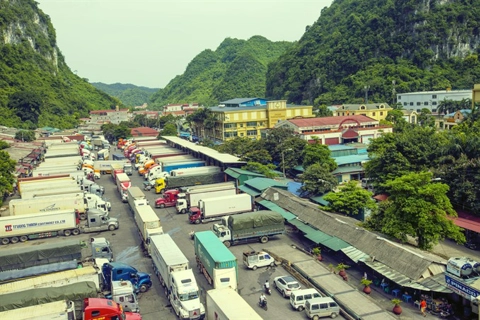
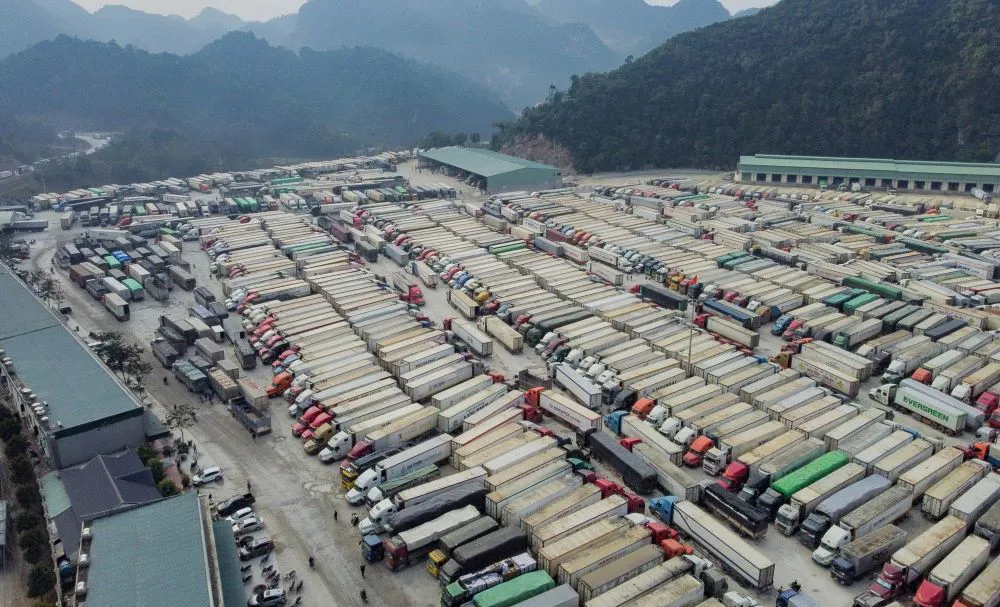
| Container trucks stuck at the Vietnam-China border gates in December 2021. Photo: Tung Dinh/ Suckhoedoisong |
Transactions at the border gates have been smoother recently after a joint working group was set up to solve the situation [which is caused by China’s Covid-19 restrictions], Spokesperson Le Thi Thi Hang of Vietnam’s Ministry of Foreign Affairs said at the press conference in Hanoi on January 20.
“The two sides have established a working group to continue exchanging and applying measures to boost customs clearance and circulation of goods at the border gates, maintaining smooth trade between the two countries while ensuring effective and scientific disease control,” Hang said in a statement.
According to Hang, the better situation was attributed to the implementation of the consensus reached on January 13 by the two prime ministers Pham Minh Chinh of Vietnam and his Chinese counterpart Li Keqiang.
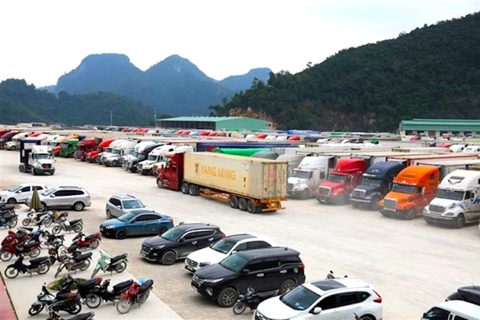
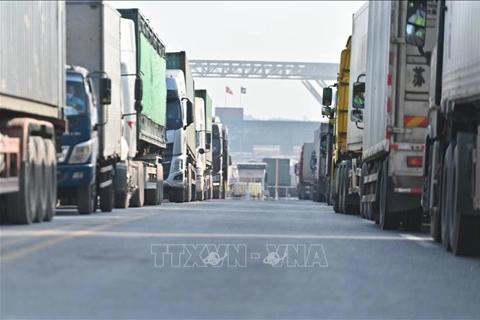
The congestion of trucks at the border gates happened since early December 2021 due to China’s Covid-19 tough anti-epidemic measures. The situation became serious after three weeks with more than 6,000 container trucks from the Vietnamese side waiting for customs clearance. Up to 90% of the goods are fruits and seafood.
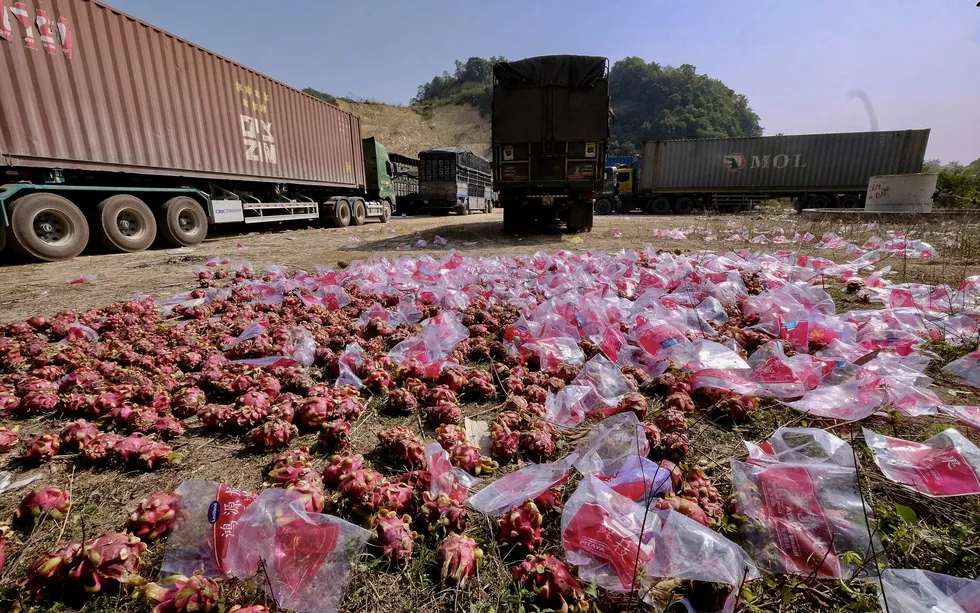
The clogging caused a loss worth VND4 trillion (US$174 million) to Vietnamese traders, estimated the Vietnam Fruit Association.
The situation triggered meetings summoned by Vietnamese PM and deputy PM with the participation of Chinese diplomats. However, few changes have been made until the talk between the governments’ leaders.
Reports by authorities in the border areas showed that customs clearance at 12 border gates with China resumed and the number of stuck trucks fell to 2,643 as of January 17.
However, the recurrence would happen anytime in the future due to China’s policy against Covid-19, local authorities said.
Meanwhile, Dang Hoang Giang, Deputy Head of the Vietnam Cashew Association (VINACAS), told Thanh nien Newspaper that the slow transactions with China might last until the end of the first quarter this year if China continues pursuing zero-Covid policy. “We can only temporarily bring goods to the border with China when they no longer pursue the zero-Covid policy,” local media quoted him.
| Rotten fruit in stuck trucks. Photo: Tuoi Tre |
Clogging at the border gates with China has occurred anytime during the year and is repeated every year due to changes from the Chinese side. The sudden border closure has put Vietnamese traders in trouble many times.
Facing unstable transactions with the giant neighbor, local authorities, experts, and businesses have been working to seek better solutions to reduce the dependence on the Chinese market. In agriculture alone, 20% of Vietnam’s total agricultural exports are shipped to China.
The agro-forestry-fishery exports to China rose strongly from $8 billion in 2015 to $11 billion in 2020. Currently, China is the second largest importer of Vietnam’s agriculture products behind the US. The export value reached $8.4 billion in the first 11 months of 2021.
Another reason keeping Vietnamese traders at risk is that some of them make unofficial transactions. Therefore, authorities have repeatedly encouraged businesses to quickly switch to official export channels to avoid putting themselves at risk. China’s import regulations remain challenging for Vietnamese traders.
Tran Thanh Hai, Deputy Director of the Import-Export Department under Vietnam’s Ministry of Industry and Trade (MoIT), told Vietnam News Agency this market has seen many changes in import policy, especially stricter regulations on product quality, food safety, and traceability. The regulations are not big problems for Vietnamese traders but move taken without warning have left them in trouble.
The problem remains unsolved when Vietnamese traders keep running unofficial-quota export. It means that delivery may not be bound by a contract but through oral agreement. Payment is mainly in cash, with delivery through auxiliary border gates and trails in the form of exchange by border residents.
For that reason, recurrence keeps happening and the exporters suffer the most.