14TH NATIONAL CONGRESS OF THE COMMUNIST PARTY OF VIETNAM
Log in
Property

South Korea helps Vietnam build more affordable houses

Social housing segment is of high demand in the lower middle-income country.

Low-income earners in urban areas and workers at industrial parks in Vietnam will soon realize their dreams to own a house thanks to a project for the 2021-2030 period funded by South Korea.

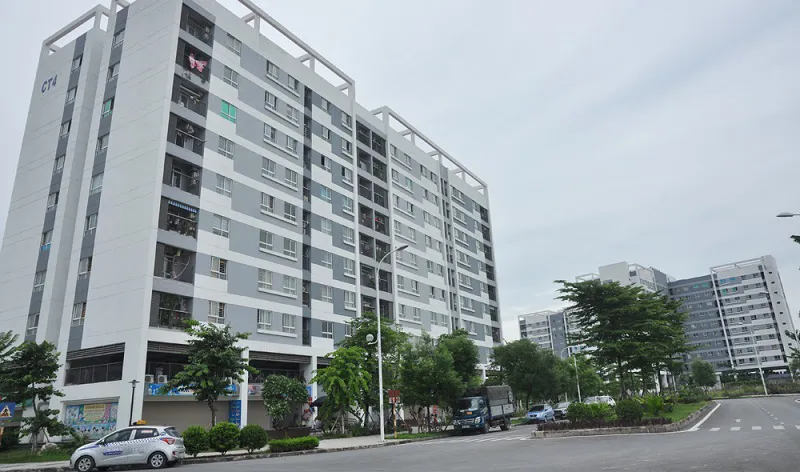
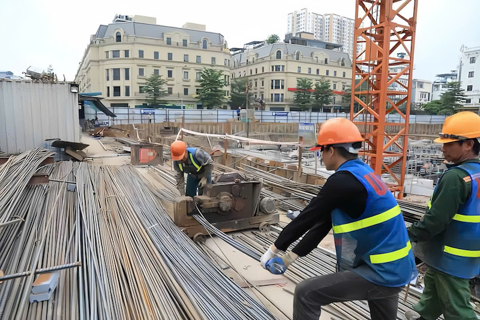
 A social housing project in Hanoi. Photo: Kinh Te Do Thi

The “Establishment of the 2021-2030 comprehensive social housing policy in Vietnam” project, which was launched in 2018 under the non-refundable aid from the Korean International Cooperation Agency (KOICA), is aimed to complete the regulatory framework on affordable housing segment that is in high demand in the lower middle-income country.

In a latest move, KOICA and the Vietnam’s Ministry of Construction are speeding up the implementation of the project that costs US$3 million from the government of South Korea.

It covers five components namely (1) assessing current situation of social housing for low-income earners in urban areas and laborers working in industrial parks; (2) having projection of affordable housing need in the 2021-2030 period; (3) completing legal framework on social housing by referring international experiences; (4) completing Law on Housing; (5) improving capacity of public officials working in this segment.

Housing is one of the important issues in Vietnam’s development agenda as stated in the 12th National Congress of the Communist Party of Vietnam since 2016. Accordingly, completing legal framework has been focused to facilitate the participation of all economic sectors, mostly the public-private partnership (PPP) form.

According to the Ministry of Construction, nearly 250 affordable housing projects totaling 5.4 million square meters for low-income earners in urban areas and workers at industrial parks have completed, supplying roughly 104,000 apartments.

There are more than 260 on-going projects providing about 219,000 apartments.

Vietnam’s affordable housing target by 2020 was 12.5 million square meters.

Reactions:
Share:
Trending
Most Viewed
Related news
Market in short of affordable housing supply

Market in short of affordable housing supply

29 Oct, 09:49

The supply of affordable apartments under VND1 billion (US$44,000) in big cities has become increasingly scarce due to rising construction costs, industry insiders said.

Promoting construction of social housing in industrial zones

Promoting construction of social housing in industrial zones

13 Sep, 21:09

Deputy Prime Minister (PM) Trinh Dinh Dung has asked provincial and municipal People’s Committees to allocate land and raise policies to attract investments in developing social housing projects to improve living standards of workers in industrial and economic zones and industrial clusters.

Construction ministry seeks ODA for social housing projects

Construction ministry seeks ODA for social housing projects

22 Jun, 14:44

The Ministry of Construction (MoC) has proposed the Government to consider the pilot use of official development assistance (ODA) capital and concessional loans in social housing projects in order to make this type of accommodation more accessible to low-income people.

Tet renovation rush strains Hanoi crews, lifts finishing material costs prices

Tet renovation rush strains Hanoi crews, lifts finishing material costs prices

Hanoi’s home renovation market has entered its busiest stretch of the year, as year-end demand tightens contractor availability and raises the cost of finishing materials.

Vietnam construction materials rebound as prices rise and public investment accelerates

Vietnam construction materials rebound as prices rise and public investment accelerates

Rising steel and cement prices, stronger public investment spending and improving consumption across key material segments point to a broad recovery in Vietnam’s construction materials sector as 2026 begins.

Hanoi sets 40 sq.m housing space goal to lift urban living standards

Hanoi sets 40 sq.m housing space goal to lift urban living standards

Raising average housing space marks a people-centered shift in urban policy as the capital works to improve living standards, expand social housing and ensure that rapid economic growth goes hand in hand with safer and more livable neighborhoods.

Prime Minister urges measures to boost supplies and control house prices

Prime Minister urges measures to boost supplies and control house prices

Vietnam’s government is stepping up efforts to rebalance the real estate market as Prime Minister Pham Minh Chinh urges faster policy action to expand housing supply, address affordability pressures and ensure the sector supports both economic stability and social welfare.

Ho Chi Minh City forms first professional association for apartment management

Ho Chi Minh City forms first professional association for apartment management

Amid rapid urban growth, Ho Chi Minh City has established a professional body for apartment management, becoming the first locality in Vietnam to do so.

Real estate credit surge prompts tighter oversight to safeguard Vietnam’s financial stability

Real estate credit surge prompts tighter oversight to safeguard Vietnam’s financial stability

Vietnam’s real estate sector has absorbed a sharp rise in credit, supporting market recovery while raising concerns over capital concentration, speculative risks and the need for tighter policy coordination.

Revised housing roadmap doubles social housing targets for Hanoi

Revised housing roadmap doubles social housing targets for Hanoi

Vietnam’s push to accelerate affordable housing has significantly raised expectations for major cities, with Hanoi now tasked with delivering a far larger volume of social homes as part of the national goal to build more than one million units by 2030.

Social housing supply exceeds targets in 2025 as Vietnam tackles property imbalances

Social housing supply exceeds targets in 2025 as Vietnam tackles property imbalances

Vietnam surpassed its social housing construction target in 2025, marking progress in housing policy, but supply mismatches, high prices and legal bottlenecks continue to weigh on the real estate market.