Vietnam boosts agro-tourism model
The program will preserve and promote traditional cultural values.
Vietnam will adopt clean and high-tech agricultural models linked with tourism development, according to a decision signed by Standing Deputy Prime Minister Pham Binh Minh early this month.
Under the decision, a rural tourism development program will be executed by the Ministry of Agriculture and Rural Development within the framework of a movement to build new rural areas in the 2021-2025 period.
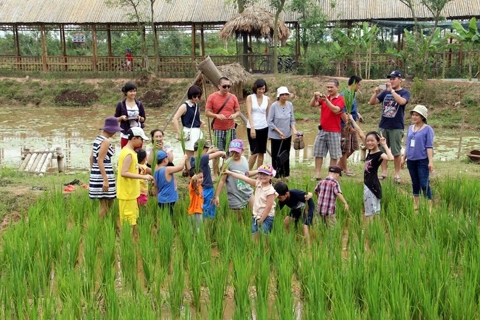
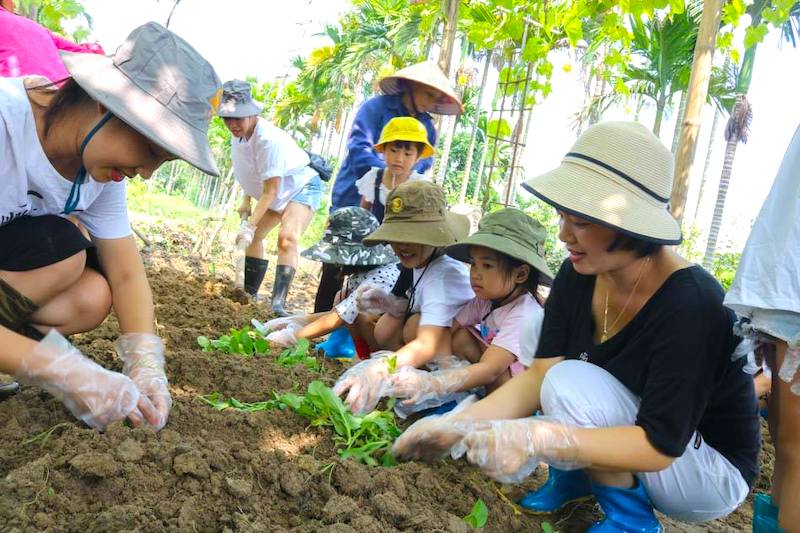
| Local tourists enjoy farming activities in Quang Ninh Province. Photo: Yen Duc Travel Company |
Promoting rural tourism is one of the key tasks of the National Target Program on New Rural Development for 2021-2025, which focuses on changing farming and rural economy mindset, thereby contributing to supporting localities to realize new rural construction goals in a sustainable manner.
According to the program, rural tourism will be built in a sustainable and inclusive manner with multiple values, in line with market demands on the basis of preserving and promoting traditional cultural values, craft villages, agricultural activities, and regional ecological environment, in association with innovation and creativity.
In addition, the plan also aims to promote the participation of people, businesses, cooperatives, and other economic organizations in rural tourism through forms of chain linkages.
By 2025, Vietnam strives to standardize rural tourism destinations and products. Each province and city will have at least one recognized rural tourist destination associated with the local advantages in terms of agriculture, culture, craft villages, and ecological environment, the Standing Deputy Prime Minister noted.
About 50% of rural tourism establishments are expected to meet tourist service standards as well as at least half of recognized rural tourist spots will be digitized and promoted by digital technology and apply e-transactions.
At least, 70% of the owners of rural tourism establishments will be trained in tourism management, while 80% of rural tourism workers will receive professional training and improve their skills. At least 50% of the rural tourism workforce will be workers. Each tourist destination will have, at a minimum, one staff fluent in foreign languages.
The program highlighted the need for developing a database and digital map of rural tourist attractions nationwide.
Plan for Hanoi agro-tourism development
Along with the national target, Hanoi's authorities have issued a plan for the development of agritourism in association with new rural areas construction in the city in the 2022-2025 period, according to Vice Chairman of Hanoi People's Committee Nguyen Manh Quyen.
According to the plan, each local district or town with potential and strength in rural tourism will have at least one to three tourism services and tourist attractions. They should aspire to get intellectual property protection for at least 50% of these products and three-star or higher recognition by the One Commune One Product program (OCOP).
In addition, each locality should develop at least one model of a typical agro-rural tourism chain with the participation of farmers, cooperatives, business households, and enterprises.
As Hanoi has many potentials and advantages for developing agro-tourism, the city's agro-tourism is expected to make a breakthrough for the local rural areas to become attractive destinations for tourists and help improve local people's income.
Many agricultural production farms and cooperatives in the outskirts of Hanoi have organized activities for visitors to experience rural life in the context of consumer trends impacted by the Covid-19 pandemic.
In Hong Van Commune, Thuong Tin District, Hong Van Flower, Bonsai, and Service Cooperative is one of more than 20 businesses providing the agro-tourism model. Nguyen Van Tu, Director of the Cooperative told The Hanoi Times that visitors can experience crop cultivation and harvesting as well as visit the areas of processing and packaging of herbal teas, and the brewing facilities for more than 100 kinds of herb wine.
Similar models have been developed in the districts of Ba Vi, Dong Anh, Ung Hoa, and Thach That for the local advantages of natural landscapes, long-standing agricultural tradition, and ancient villages. These days, Dong Que Farm in Ba Vi District welcomes many groups of students coming for extracurricular activities.
The visitors can experience the ancient space of Vietnamese villages and join the farmers in several activities such as growing vegetables and harvesting crops. To attract more tourists, Dong Que Farm, in cooperation with local residents, has organized tours to the traditional medicine village of the Dao ethnic group or allowed visitors to enjoy the Muong people's dance. Located in Phu Cuong Commune, Soc Son District, Long Viet Agricultural Park, with an area of 120,000m2, has become a favorite destination for many families and students in Hanoi.
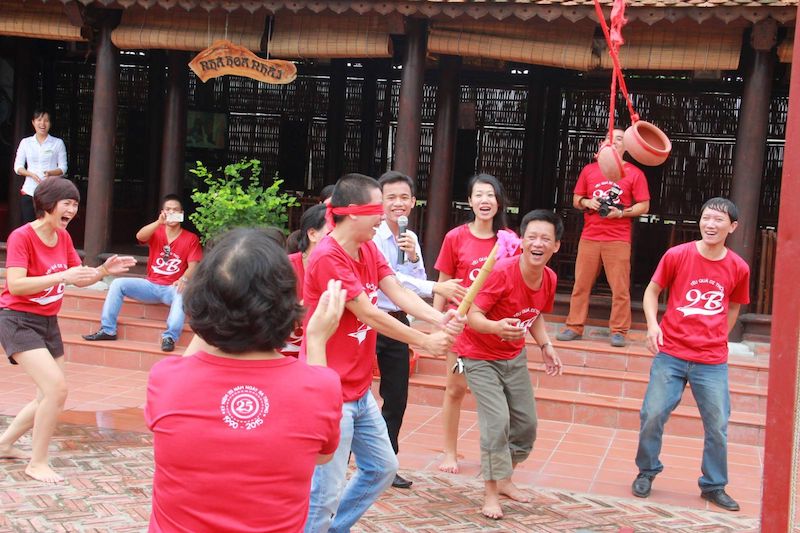
Visitors can participate in folk games such as catching fish, Blind Man's Bluff, basket boating, growing vegetables, and rice, as well as harvesting tomatoes. Chairman of the Tourism Advisory Council Tran Trong Kien said that the agricultural tourism model not only provides livelihoods to farmers but also contributes to preserving and promoting traditional cultural values, landscape, and ecological environment, as well as supporting the diversified and sustainable development of tourist destinations.
Barriers need to be removed
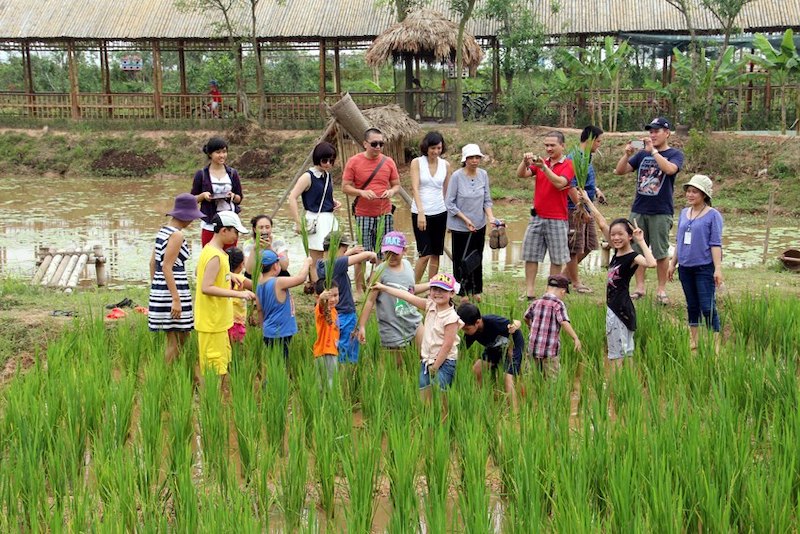
| Children join farming activities at Long Viet Agricultural Park. |
Among weaknesses in agro-tourism development, Deputy Director of the Hanoi Department of Tourism Tran Trung Hieu mentioned the insufficient and unprofessional human resources for agritourism. “Agro-tourism enterprises are few in number and insufficient in qualification. In addition, the system of supporting infrastructure for agricultural tourism is not comprehensive, making it difficult for visitors to access,” he told The Hanoi Times.
Director of VietSense Travel Nguyen Van Tai said that agro-tourism in Hanoi still lacks unique products and local businesses are running small and fragmented activities.
“The linkage between the three parties namely the authorities, residents, and travel businesses is still weak, so they have not been able to create a driver for the development of agritourism,” he added.
Deputy General Director of Vietnam National Administration of Tourism Ha Van Sieu admitted the lack of an overall policy on agritourism at the national level, and currently, each locality applies its own policies.
"To overcome the difficulty, the management agencies should soon have specific and complete guidelines, mechanisms, and policies from the central to the local level on the organization and management of agro-tourism," he said.
In this regard, the Hanoi Department of Tourism plans to help companies improve the professional qualifications of guides and staff by organizing training courses, as well as encouraging travel companies to coordinate with localities to open galleries where handicrafts and specialties from villages are sold.