Vietnam to balance rice exports and national food security: PM
Vietnam had exported 4.83 million tons of rice by the end of July, amassing US$2.6 billion in revenue.
Vietnam should seize the opportunity presented by rising global food prices to expand exports and enhance farmers' livelihoods while ensuring national food security under all circumstances.
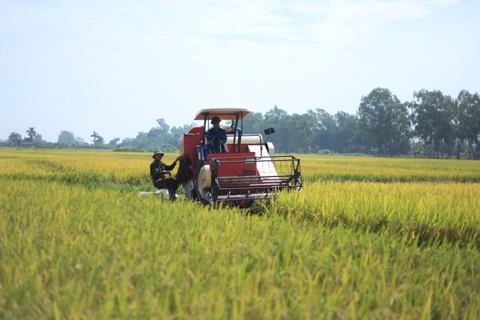
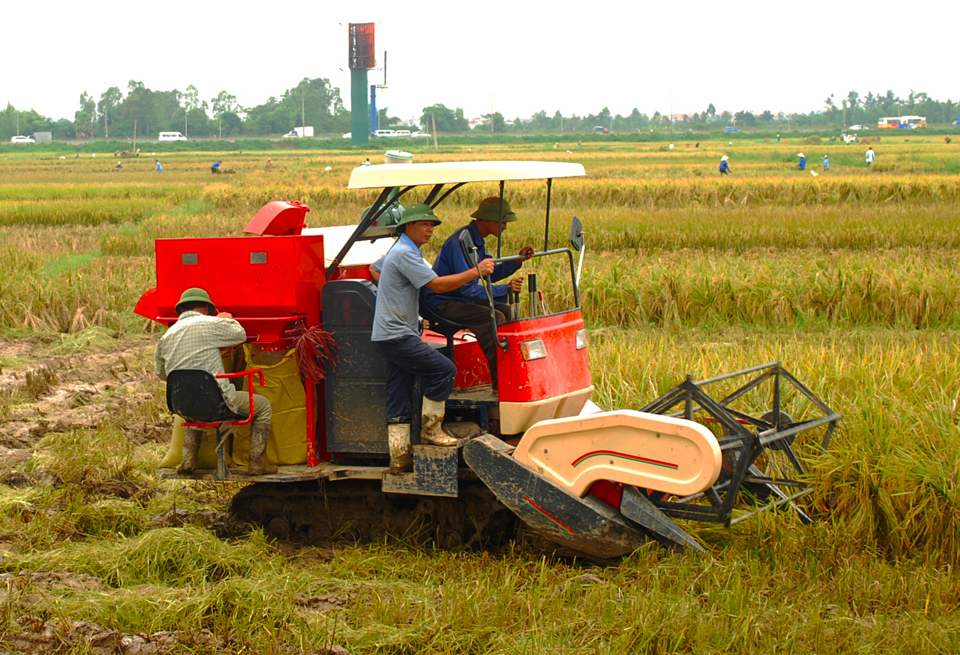
| Rice harvest in Hanoi. Photo: Pham Hung/The Hanoi Times |
Prime Minister Pham Minh Chinh underscored this view in his Directive No.24, which focuses on maintaining food security while expanding rice production and exports.
This directive comes amid complicated global food trade dynamics and increased rice prices due to grain export restrictions by India, Russia, and the United Arab Emirates. There have been significant purchases of rice by certain regions for Vietnamese rice, leading to local supply-demand imbalances and driving up domestic rice prices to unjustified levels.
In response, the Prime Minister instructed the Ministry of Agriculture and Rural Development (MARD), in collaboration with other ministries and localities, to review planting plans to ensure the achievement of an annual unhusked rice production target of more than 43 million tons.
With the Ministry of Industry and Trade (MoIT) and local entities, MARD will closely monitor developments in regional and global rice markets and assess production scenarios and rice yields for different varieties and seasons.
"This approach aims to harmonize rice supply to meet both domestic consumption and export demand while prioritizing the overarching goal of maintaining national food security," the policy states.
To pursue this goal, inter-ministerial discussions will be intensified to reduce technical barriers and expand Vietnam's rice export horizons. Recommendations will be made to localities, enterprises, and local farmers, emphasizing compliance with Vietnam's rice quality standards and import market regulations.
The Prime Minister has asked ministries and government agencies to supervise rice export operations to ensure food security, enhance export prospects, and discourage speculative and profit-driven practices.
This includes monitoring the global rice trade landscape and the activities of rice-producing and exporting countries to proactively regulate rice production, business activities, and export efforts.
MARD projected a nationwide rice area of 7.1 million hectares for 2023, with a harvest of more than 43 million tons of unhusked rice (equivalent to more than 20 million tons of processed rice).
In early August, Vietnam harvested more than 24 million tons of rice. Barring unforeseen weather disruptions, the remaining harvest for the year is expected to meet domestic and export demand. The planned volume for export is about 15 million tons (equivalent to 7-7.5 million tons of processed rice).
According to the directive, the MoIT would promptly submit to the government a draft decree to amend and supplement Decree 107 on rice trade and export. This includes the need for strict regulations on the conditions for rice export operations and the quality of both rice and exported rice. Traders should cooperate with rice farmers in rice production and consumption.
The Ministry and other relevant agencies are tasked with advancing rice promotion and trade in line with the current landscape to enhance the value of Vietnamese rice commodities. This includes leveraging the favorable provisions of free trade agreements (FTAs) to penetrate new and promising markets and improve the competitiveness of Vietnam's rice sector.
The Prime Minister also asked the Minister of Finance and the Governor of the State Bank of Vietnam to proactively implement measures to stabilize prices and support rice producers, exporters, and traders.
The Ministry of Finance will calculate and harmonize rice reserves to ensure that there will be no food or rice shortages in the event of grain deficits, natural disasters, or disease outbreaks. Local authorities will monitor rice production, distribution, and consumption.
According to the Vietnam Food Association, as of July 27, domestic rice prices had risen by VND368-441 per kilogram compared to June. Compared to the same period in 2022, rice prices surged by VND2,400-3,400 per kilogram.
The Prime Minister emphasized the need to firmly crack down on speculation and illegal profiteering that lead to unjustified increases in rice prices, disrupting the stability of the domestic market.
Rice exporters are required to maintain minimum circulation reserves, submit reports upon request, and exercise vigilance in forming partnerships before entering into agreements, executing transactions, receiving shipments, and making payments, all aimed at preventing fraudulent practices.
Following the announcement of export bans by India, Russia, and the United Arab Emirates, the value of Vietnamese rice on the world market has risen steadily over the past two weeks, peaking at nearly $660 per metric ton for 5% broken rice. In particular, numerous needs such as China, the Philippines, and Indonesia have competed for Vietnamese rice, resulting in an escalation of demand ranging from 40% to several times.
According to MoIT records, Vietnam had exported 4.83 million tons of rice by the end of July, generating nearly $2.6 billion in revenue. The predominant traditional export destinations within Asia accounted for 3.3 million tons (more than 77% of the total), an impressive increase of nearly 36% over the corresponding period last year.
Specific markets showing remarkable growth, such as the European Union, accounted for only 2% of the total volume, but recorded an intake of more than 84,000 tons, an increase of 28% compared to the same period of the previous year.