Vietnam's economic conditions continue to improve: World Bank
Vigilance in social distancing, testing, and quarantining is important to avoid a new wave of infections affecting lives and forcing new restrictive measures.
Vietnam’s economic conditions continue to improve, as both industrial production and retail sales registered a third month of growth, according to the World Bank’s monthly report.
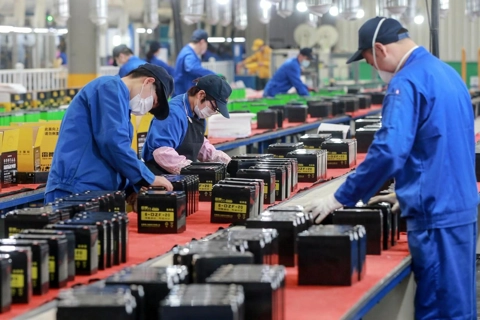
| Electronic production at 4P Company in Bac Ninh Industrial Park. Photo: Pham Kien |
.jpeg)
In November, the industrial production index increased by 5% against the previous month, for which World Bank suggested this recovery partly reflected the resumption of economic activities in the Southern provinces, including Ho Chi Minh City (up 13.3% month-on-month).
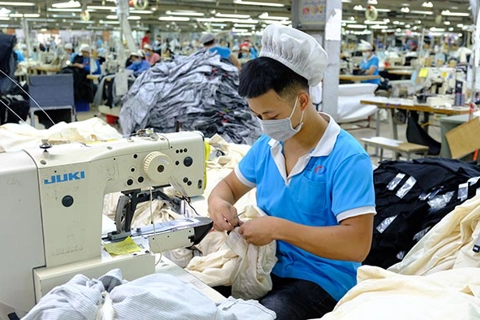
“With the ongoing recovery in November, the industrial production index exceeded the level observed a year ago,” it added, noting food, tobacco, textiles and garment, rubber and plastic products, and metals were the most dynamic sub-sectors, posting double-digit year-on-year growth rates.
Production of electronic, computer and optical products also grew strongly by 8.5% year on year. The manufacturing PMI stood at 52.2 in November, almost the same as in October and above the 50-neutral benchmark, indicating continued improvement in economic conditions, stated the report.
Meanwhile, retail sales also increased by 6.2%, which was driven by domestic demand’s continued recovery.
Sales of services, which were hit harder by social distancing measures than sales of goods during the third quarter lockdown, were recovering faster in the aftermath (12.5% month-on-month compared to 5.2%).
Another positive sign from the economy came from a 45% increase in the number of newly established formal firms in November, the second month of increase since May.
Firm exit numbers also increased, but at a slower pace than firm entry, while more businesses resumed than suspended operations, stated the World Bank, adding the higher net entry could be attributed to improved economic conditions.
The trade surplus reached US$1.3 billion in November as merchandise export growth accelerated from 6.1% year-on-year in October to 26.5% in November, exceeding the import growth rate of 24.1%.
Year-to-date merchandise trade registered a surplus of $1.46 billion, as World Bank said the strengthened export performance can be attributed to the resumption of manufacturing activities, particularly in high-tech product sectors.
Exports of phones, computers and electronics, and machinery, which accounted for over 40% of total exports increased by 19.6% in November to $13.3 billion.
After two months of decrease, the Consumer Price Index (CPI) increased by 0.3% month-on-month in November. This partly reflected the rising cost of transports (up 3.1%) due to higher fuel prices, recovering domestic demand for the non-food product as well as increasing logistics costs.
Compared to a year ago, CPI rose by 2.1% year-on-year, slightly higher than in October, but well below the 4% target set by the State Bank of Vietnam.
In November, the budget surplus increased to VND120.3 trillion ($5.2 billion), thanks to an additional surplus of VND45.4 trillion ($2 billion). Over the first eleven months, the total collected revenue exceeded the annual plan for 2021 by 3.4%.
Vigilance in Covid-19 response required
The World Bank noted Vietnam continued its contractionary fiscal stance, while the policy of living with Covid-19 will involve continued vigilance and fast action by the authorities.
Although the fatality rate is trending down, the number of new cases is rising rapidly.
Thus, in addition to continuing the accelerated vaccination program, vigilance in social distancing, testing, and quarantining is important to avoid a new wave of infections affecting lives and forcing new restrictive measures, stated the World Bank.
On the fiscal front, going forward, there is a clear need to support private demand to help the domestic economy recover and contribute to growth. Providing support to impacted workers and households would be an essential avenue to achieve this objective.
“Given the available fiscal space, and difficulties registered in implementing the budget in 2021, the government may also consider revenue measures to support domestic demand,” stated the World Bank.
This could include a reduction in the value-add taxes (VAT) in 2022 to support private consumption, it added.
At a time when Hanoi is adopting social distancing measures, a total of 70 industrial parks, home to 4,169 enterprises and 62,000 workers, are still operational. As of September, 1,077 large-scale enterprises have had their anti-Covid-19 plans approved by local authorities. Meanwhile, business households and small-scale enterprises have signed commitments with the city on their compliance to restriction measures to keep business running. Despite recording an economic expansion of just 1.28% in the January-September period, Hanoi is determined to push for a growth rate of 4.54% for this year as the city looks to lay a strong foundation for next year. |