Vietnam's exports at risks as US tariffs loom
The shadow of tariffs hangs over Vietnam’s trade outlook.
Experts were unanimous that not only steel but many other Vietnamese export products are at risk from looming tariffs.
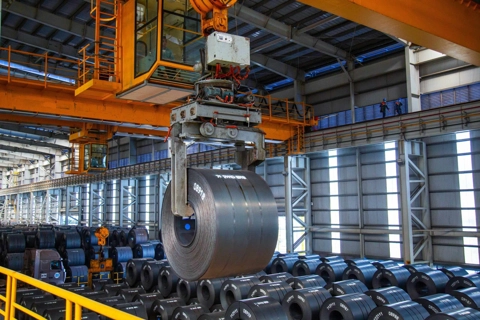
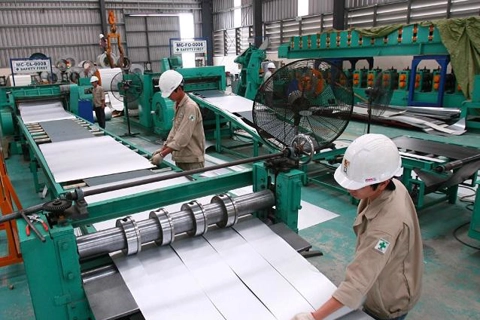
| Steel production at Hoa Sen Group. Photo: Hoa Sen Group |
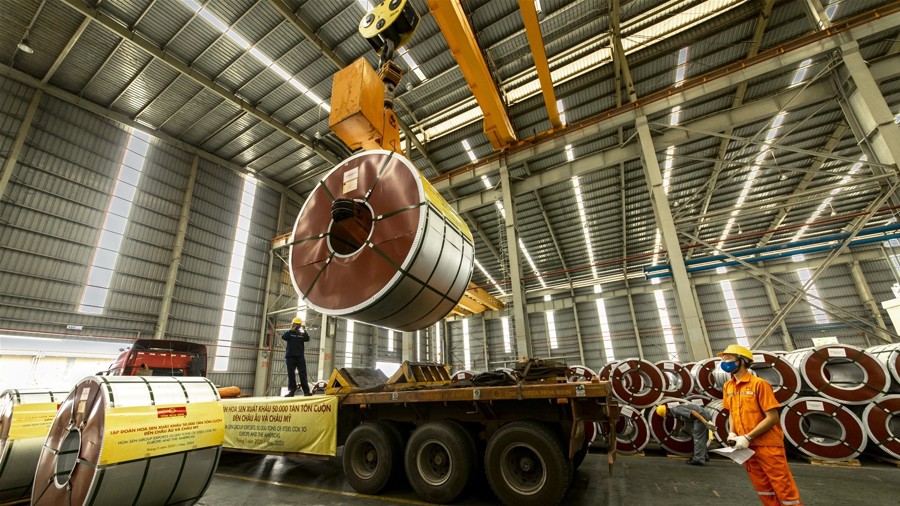
US President Donald Trump on February 4 signed an order imposing a 25% tariff on all aluminum and steel imports into the country. According to CNBC, the decision is expected to affect several major exporters, including Vietnam, Canada, Mexico, Brazil, South Korea, Japan, and Germany.
Data from the US Department of Commerce shows that Vietnam’s steel exports to the US reached $1.13 billion last year, ranking eighth in value. However, Vietnam had the highest growth rate among steel suppliers, with exports surging over 140% from 2023, CNBC reported.
According to Vietnam’s General Department of Customs, the country exported 1.67 million tons of steel to the US last year, valued at nearly $1.32 billion. This accounted for 9.4% of Vietnam’s total steel export volume and 10.5% of its total steel export revenue.
While steel may be the first product hit directly by Trump’s tariff policy, analysts at HSBC warned in a report released on February 11 that the risk of tariffs casts a shadow over Vietnam’s trade outlook. The report noted that Vietnam faces significant tariff risks due to its large trade surplus with the US.
Last year, Vietnam exported $112.5 billion worth of goods to the US while importing only $10.5 billion, representing a 16% increase in exports and a nearly 24% drop in imports compared to 2023.
Beyond the direct impact of the tariffs, there are concerns about their broader economic effects, including weaker consumer demand, exchange rate fluctuations, and declining export prospects for various industries beyond steel. The US, Vietnam’s largest export market, may experience slower economic growth and higher inflation, which could dampen consumer spending.
A recent forecast by United Overseas Bank (UOB) suggested that, based on the announced tariff policies (excluding the 25% steel tariff) and additional threats, US GDP growth may slow to 1.8%, while inflation could rise by 0.4 percentage points to 2.5%. If the tariffs on Mexico and Canada - currently on hold - are enforced next month, US economic growth could fall to just 1%, with inflation rising to 3.1%, noted the Singapore bank.
Olu Sonola, Head of US Economic Research at Fitch Ratings, projected that the upcoming tariffs could lead to higher inflation and slow consumer spending, particularly on durable goods.
Durable goods, including major home appliances (such as refrigerators and air conditioners), electronics (such as phones, TVs, and cameras), automobiles, furniture, and industrial machinery - many of which are key Vietnamese exports to the US, generate billions of dollars in revenue annually. Last year, Vietnam exported $9 billion in furniture, $9.8 billion in phones, and $22 billion in machinery and equipment to the US.
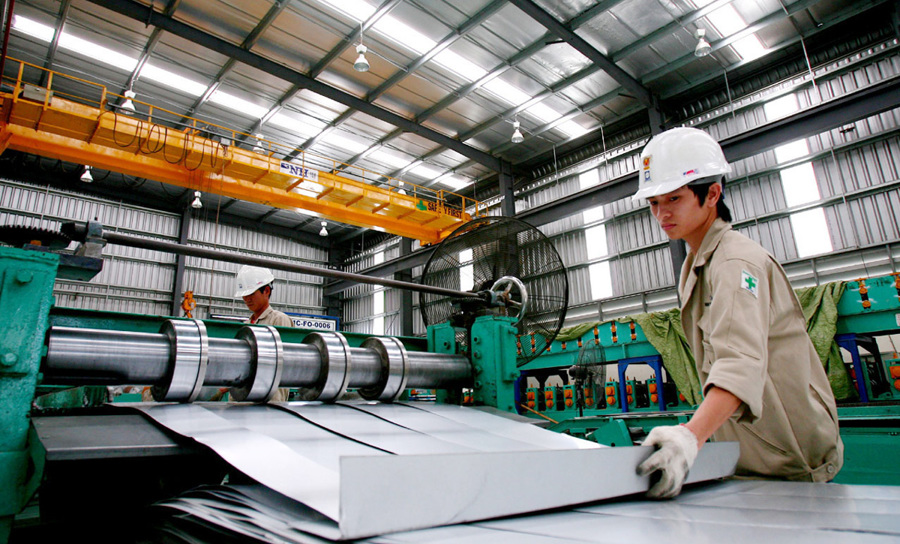
| Steel remains Vietnam's key export product to the US. Photo: Hai Linh/The Hanoi Times |
The textile and garment industry, another major export sector, is also at risk. Last year, Vietnam exported $44 billion worth of textiles and garments globally, an 11% increase from 2023. The US was the top market, accounting for over $16 billion in sales.
Many experts believe that tariffs and inflation risks may result in the US Federal Reserve (Fed) being more cautious in cutting interest rates, which may keep the US dollar strong. UOB forecasts that the USD/VND exchange rate could gradually rise to a peak of VND26,000 per USD by the third quarter.
A weaker Vietnamese dong benefits exports, but exchange rate pressure also increases input costs. Last year, Vietnam’s total exports reached $405.53 billion, while imports totaled $380.76 billion, according to the General Statistics Office. More than 93% of total imports came from 46 major product categories, each worth over $1 billion, mainly for industrial production needs.
With tariff risks and rising input costs, corporate profit margins could be squeezed. HSBC’s report highlighted that Vietnam’s manufacturing sector remains heavily reliant on imports. Additionally, a stronger US dollar makes competitors with weaker currencies more price competitive, it said.
Furthermore, foreign direct investment (FDI) enterprises operating in Vietnam, which conduct business in US dollars, may face greater growth pressures as exchange rates fluctuate. Analysts at the Business Support Research Center (BSA) noted that as these companies, along with Vietnamese exporters, shift their focus to the domestic market, competition in Vietnam could intensify, especially since consumer demand has yet to show significant improvement.
Despite these risks, HSBC analysts believe it is too early to draw definitive conclusions given the uncertainties in the region and Vietnam’s trade dynamics. Key questions for Southeast Asia include whether the tariff risks will materialize and how many companies are willing to relocate supply chains, an expensive and time-consuming process, due to short-term political factors.
UOB predicts that financial markets and global investors will need to adjust to ongoing tariff threats and last-minute trade negotiations. Meanwhile, BSA recommends that businesses proactively develop contingency plans to navigate potential global trade conflicts.