14TH NATIONAL CONGRESS OF THE COMMUNIST PARTY OF VIETNAM
Log in
Business

Vietnam's foreign borrowings jump 1.6-fold to US$533 million in H1

The government is looking at loans and government bonds, among others, to meet growing demand of state expenditure.

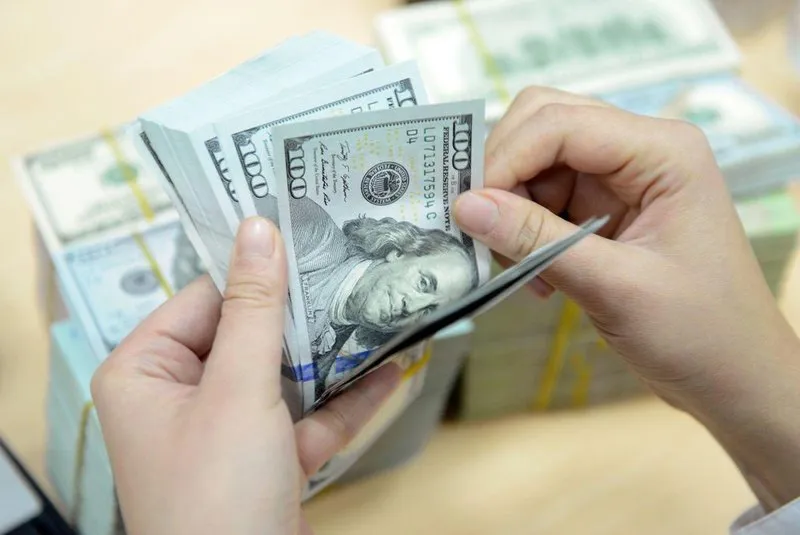
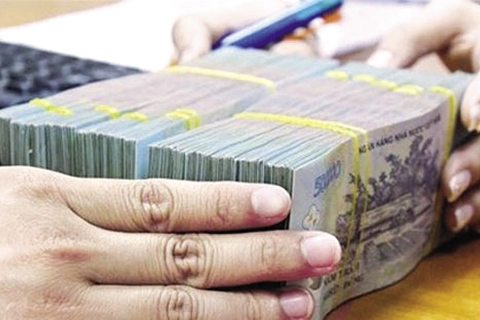
In the first six months of the year, the Vietnamese government signed five loan agreements to borrow a combined US$533.2 million from foreign creditors, up 1.6-fold compared to the same period last year, according to the Ministry of Finance (MoF).

 Vietnam government loans up 1.6-fold in 6-month to US$533 million.

In addition to foreign loans, the MoF has increased the sale of government bonds, particularly 10-year notes, to meet growing demand of state expenditure in public investment and the government’s support programs for businesses and people affected by the Covid-19 pandemic.

Meanwhile, the MoF has been focusing on perfecting the legal framework for public debt management, including the issuance of government Decree No.56/2020/ND-CP on May 25 on the management and use of Official Development Assistance (ODA) and preferential loans granted by foreign donors.

Additionally, the MoF is revising Decree No.97/2018/ND-CP on on-lending of ODA loans and foreign concessional loans provided by international donors for greater efficiency in public debt management.

Under the severe impacts of the Covid-19 pandemic, 90 countries and territories have had their credit ratings downgraded or their outlook adjusted by rating agencies in the first half of the year.

In case of Vietnam, Fitch Rating on April 8 affirmed the country’s sovereign credit rating at “BB”, indicating Vietnam’s key credit strengths remain intact, while the outlook on Vietnam’s long-term Foreign-Currency Issuer Default Rating (IDR) was revised from Positive to Stable.

On May 21, Standard and Poor’s (S&P) announced its decision to maintain Vietnam’s sovereign rating at “BB”, with stable outlook.

The government has set up two growth scenarios for this year, in which both public debt and fiscal deficit indicators in the 2016 – 2020 period would stay below the ceilings of 65% and 3.9% of GDP, respectively.

For the first scenario where Vietnam’s GDP growth is forecast at 4.5%, the budget deficit would be around 4.73% of GDP (representing an increase of VND75 trillion (US$3.25 billion) compared to the year’s estimate), and public debt at 55.5% of GDP.

In a worst-case scenario with a slower economic expansion of 3.6%, the fiscal deficit will likely be 5.02% of GDP, or VND90 trillion (US$3.9 billion) higher than the estimate, and public debt at 56.4% of GDP.

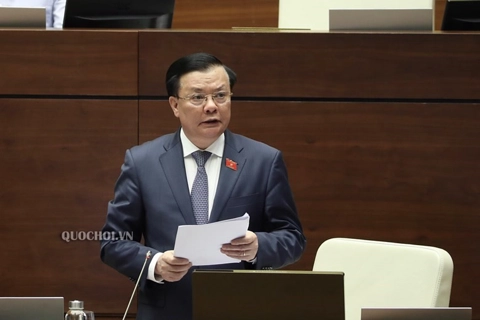
Under this circumstance, Prime Minister Nguyen Xuan Phuc expected fiscal deficit and public debt could widen by an additional 3 – 4 percentage points of GDP to provide more support for the people and business community.

Reactions:
Share:
Trending
Most Viewed
Related news
Hanoi poised to lead low-altitude space economy

Hanoi poised to lead low-altitude space economy

The low-altitude economy is not a distant vision but a reality already taking shape, bringing a rare opportunity for Hanoi to lead the next phase of urban technological transformation.

Vietnam, US to continue reciprocal tariff talks next week

Vietnam, US to continue reciprocal tariff talks next week

Vietnam has reaffirmed its willingness to facilitate greater access for US goods and companies as Hanoi and Washington prepare to hold the sixth round of negotiations on reciprocal tariffs.

Viettel Money added to national public service portal, expanding cashless government payments

Viettel Money added to national public service portal, expanding cashless government payments

Vietnam is expanding cashless public services as Viettel Money joins the National Public Service Portal, helping streamline administrative processing for both citizens and government agencies nationwide.

Vietnam’s online food delivery market jumps 19% in 2025 as duopoly tightens grip

Vietnam’s online food delivery market jumps 19% in 2025 as duopoly tightens grip

Rapid urbanization and app-based lifestyles are reshaping how Vietnamese consumers order meals, with food delivery platforms expanding quickly in 2025 amid rising competition, service innovation and growing reliance on digital channels for everyday dining across major cities.

Four competitive pillars shape HCMC-based international financial center vision

Four competitive pillars shape HCMC-based international financial center vision

Currently ranked 95th out of 120 cities in the Global Financial Centres Index, Ho Chi Minh City aims to reach the top 75 by 2035 and the top 50 by 2045.

FPT opens advanced chip testing plant, deepening Vietnam’s role in global semiconductor chains

FPT opens advanced chip testing plant, deepening Vietnam’s role in global semiconductor chains

FPT has announced the establishment of an advanced semiconductor testing and packaging plant in the northern province of Bac Ninh, expected to begin operations this year, marking a significant step toward completing Vietnam’s semiconductor value chain.

Japanese food companies step up focus on Vietnam market

Japanese food companies step up focus on Vietnam market

As Vietnam’s income levels rise, consumer demand has gradually shifted toward higher-quality and more diverse food products.

Vietnam targets national gold exchange launch in February to improve market transparency

Vietnam targets national gold exchange launch in February to improve market transparency

Vietnam is accelerating financial market reforms as the government pushes forward plans for a national gold exchange platform and experiments with digital asset trading, aiming to improve transparency, stabilize markets and strengthen macroeconomic management.